 Save
Save Last summer, I found myself hosting an impromptu brunch when friends texted asking what I was up to, and instead of scrambling, I remembered a Mediterranean platter I'd seen at a market in Athens years ago. The board was chaos in the best way—colors bleeding into each other, little bowls of creamy dips nestled between olives and cheese, bread piled high like an afterthought. I realized that day that some of the most impressive meals are actually the easiest to pull together when you know the trick: let the ingredients speak for themselves and make it beautiful.
I made this for my partner's family dinner once, nervous about feeding eight people something that felt special enough, and watched something unexpected happen—everyone abandoned their seats and gathered around the board like we were opening a present together. My mother-in-law spent twenty minutes mixing different dips and vegetables in her bread, laughing at herself, and that's when I understood this recipe isn't really about the food at all. It's about creating a moment where people slow down and play with their meal.
Ingredients
- Chickpeas (1 can, 15 oz): The creamy backbone of hummus—always drain and rinse them well to avoid a gritty texture that'll disappoint you halfway through blending.
- Tahini (4 tablespoons total): This sesame paste is what makes the dips taste authentically Mediterranean, but use the good stuff because cheap tahini can taste bitter and ruin the balance.
- Lemon juice (5 tablespoons total): Fresh lemon is non-negotiable here; bottled juice tastes flat and metallic, and your guests will taste the difference instantly.
- Greek yogurt (1 cup): Full-fat is your friend because it creates that silky tzatziki that feels luxurious on your tongue.
- Eggplant (1 medium): Choose one that feels heavy for its size, which means it's full of moisture and will roast into something creamy rather than dry and sad.
- Cucumber (1 large for slicing, 1 medium for grating): Slice your serving cucumber just before assembly so it stays crisp, but grate the one for tzatziki well ahead and squeeze it dry in a clean kitchen towel to avoid a watery dip.
- Cherry tomatoes (1 cup): These stay fresher longer than large tomatoes and their sweetness balances the savory dips perfectly.
- Bell pepper (1 large): Red or yellow adds more visual punch and natural sweetness than green.
- Olives (1 cup mixed): Mix kalamata and green varieties so you get briny complexity rather than one-note saltiness.
- Feta cheese (1 cup crumbled): Buy it in blocks and crumble it yourself right before serving so it doesn't dry out sitting in the container.
- Mixed nuts (1 cup): Raw or lightly toasted; toasted nuts add deeper flavor but raw ones stay crunchier longer on the board.
- Pita and flatbreads: Warm them in the oven for five minutes before cutting so they're pliable and stay fresher throughout your meal.
- Olive oil (2 tablespoons plus more for cooking): Good quality matters here since it's a finishing touch people will taste directly.
- Fresh herbs (oregano, parsley, dill): Chop these just before garnishing or they'll turn brown and look sad.
Tired of Takeout? 🥡
Get 10 meals you can make faster than delivery arrives. Seriously.
One email. No spam. Unsubscribe anytime.
Instructions
- Blend the hummus:
- Combine your drained chickpeas, tahini, lemon juice, minced garlic, and salt in a food processor and blend until it reaches that cloud-like texture where it's completely smooth but still has a tiny bit of resistance. Add water one tablespoon at a time if it's too thick, because you want it creamy enough to dip bread into but not so loose it slides off.
- Chill and strain the tzatziki:
- Mix Greek yogurt with your grated cucumber (squeezed until your forearms hurt), minced garlic, olive oil, fresh dill, and salt, then refrigerate for at least an hour so the flavors marry and the dip gets thick and cold. The waiting is worth it—rushed tzatziki tastes like separate ingredients instead of one cohesive, cooling dip.
- Roast the eggplant:
- Pierce your eggplant a few times with a fork so it doesn't explode, place it directly on the oven rack at 400°F, and roast for thirty to thirty-five minutes until the skin blackens slightly and the flesh is completely soft when you press it. When it cools just enough to handle, scoop the creamy insides away from the charred skin—this smoky flavor is what makes baba ganoush special, so don't skip the roasting.
- Blend the baba ganoush:
- Combine your scooped eggplant with tahini, olive oil, lemon juice, and salt, then blend until you get something that looks like whipped butter—silky, luxurious, and ready to coat your bread. Taste it and add more lemon if it tastes flat, because eggplant needs brightness to shine.
- Arrange everything strategically:
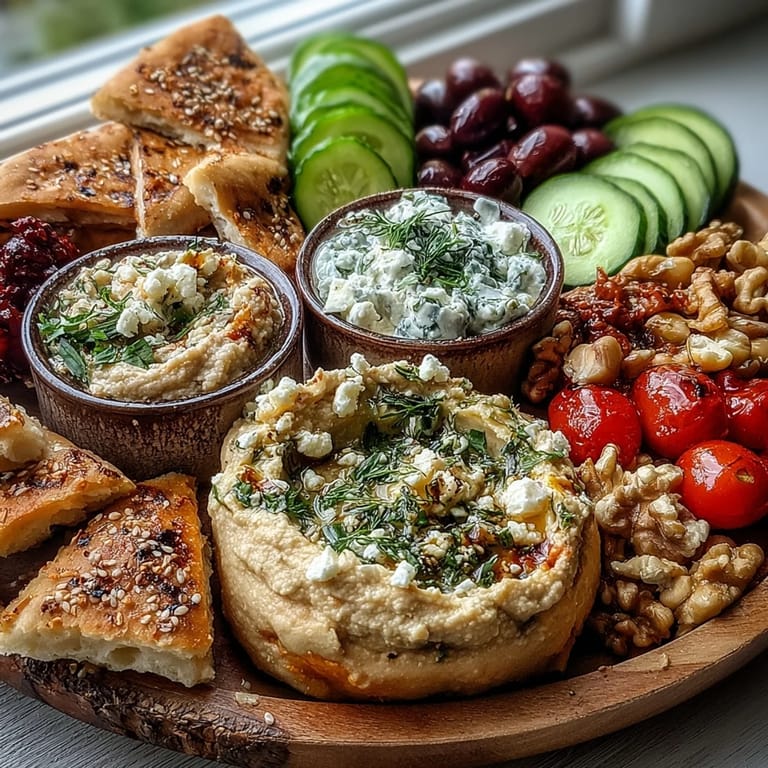
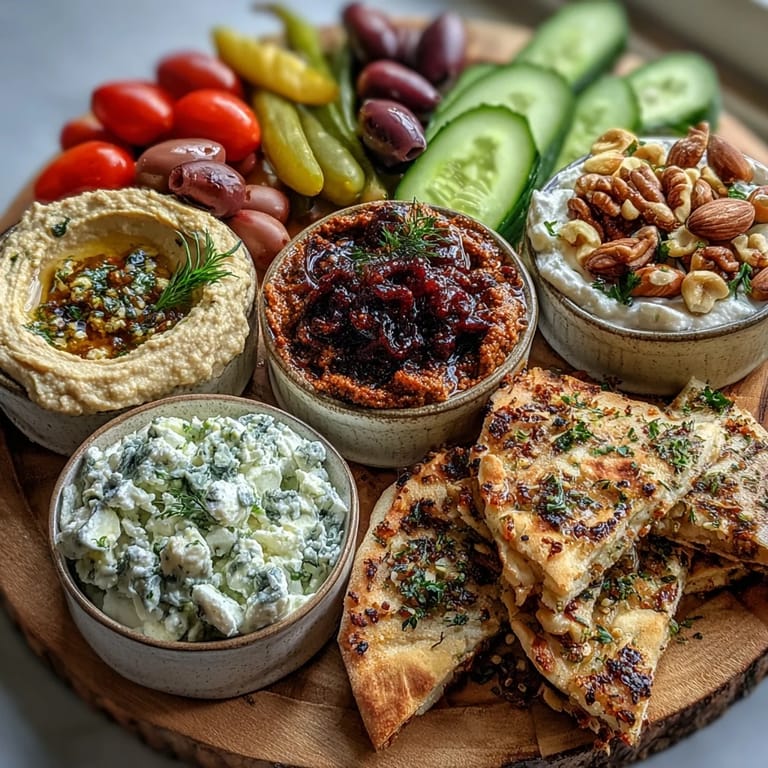
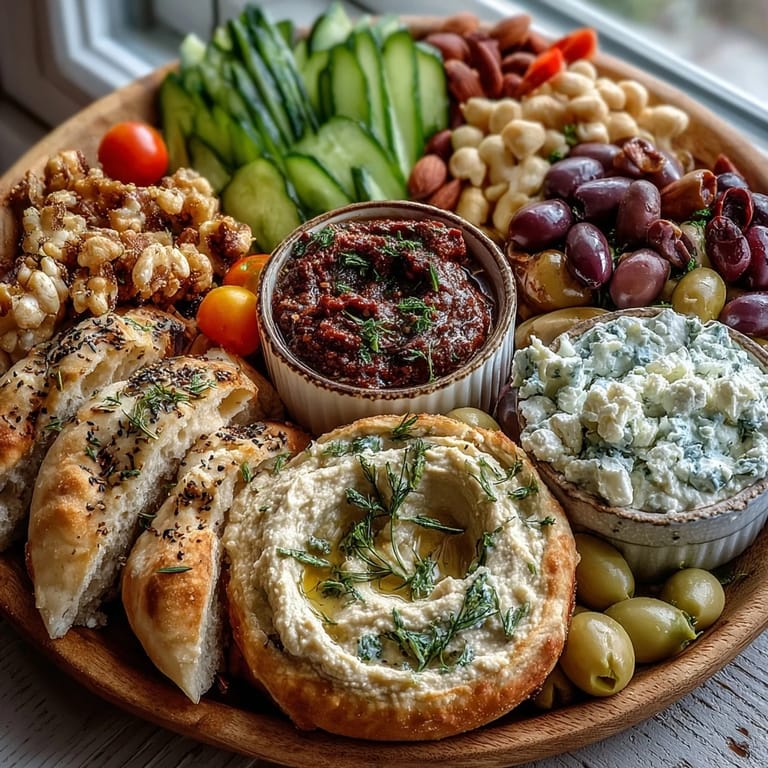
- Pour each dip into its own bowl and place them around the center of your largest platter with space between them so people can actually see each one. Layer vegetables, olives, nuts, and cheese around the dips in a way that feels loose and abundant rather than rigid, then tuck bread pieces wherever there's empty space like you're filling pockets.
- Finish with drama:
- Drizzle everything with good olive oil—it catches the light and makes the whole board look alive—then scatter fresh herbs across the top so it looks like you didn't overthink it. Serve immediately so the bread is still warm and everything else is at its freshest.
 Save
Save There's something almost meditative about arranging a board like this, watching it come together under your hands. My kitchen was quiet that afternoon except for the sound of my knife on the cutting board, and by the time my friends arrived, I'd created something that looked like I'd spent all day on it but actually took less time than a single recipe usually demands.
Building Your Perfect Board
The secret to a board that actually looks Instagram-worthy isn't about following some rigid design principle—it's about understanding that contrast is your friend. Pile soft dips next to crisp vegetables, scatter dark olives near white cheese, let green herbs break up the browns and tans. One time I made this for a client dinner and spent way too long measuring out equal portions, and it looked stiff and awkward until I stopped overthinking and just let my hand guide where things went. Abundance matters more than perfection.
The Dip Hierarchy
Hummus is the crowd-pleaser that everyone reaches for first, so make sure yours is silky and well-seasoned—this is where tahini quality actually matters because cheap tahini tastes bitter and thin. Tzatziki is the cooling refresher, the one people go back to between bites of everything else, and it absolutely needs time in the refrigerator to develop its personality. Baba ganoush is the wild card, the one that makes people pause and say what is this?, and that's exactly why it needs to be on your board—it's the conversation starter that transforms a platter into an experience.
Making This Meal Your Own
This isn't a recipe you need to follow like gospel—it's a framework you can rearrange based on what you love and what your guests love. I've made this board in winter with roasted vegetables instead of raw, added crispy chickpeas for extra crunch, stirred spiced paprika into the hummus one time and watched everyone ask what made it taste so good. The beauty is in the flexibility, in knowing that you can build something impressive without a single complicated technique.
- Prep dips a full day ahead and actually relax while your guests arrive instead of stress-blending.
- Toast your nuts lightly for deeper flavor, but only add them to the board right before serving so they stay crunchy.
- Warm your breads in a 350°F oven for five minutes just before assembly so they're still soft enough to tear and flexible enough to scoop.
 Save
Save A Mediterranean board is one of those rare dishes that gets better as people gather around it, as flavors mix and conversations start flowing. Make it, trust it, and watch how quickly your kitchen becomes the place where everyone wants to be.
Recipe FAQ
- → Can I prepare the dips ahead of time?
Absolutely. All three homemade dips—hummus, tzatziki, and baba ganoush—actually benefit from resting in the refrigerator for several hours or overnight. This allows the flavors to meld and deepen. Store them in airtight containers and bring to room temperature 30 minutes before serving for optimal creaminess.
- → What can I substitute for feta cheese?
For a dairy-free version, skip the feta entirely or use a plant-based crumbly cheese alternative. You could also add more nuts or include avocado slices for richness. Another option is marinated tofu cubes or extra olives to maintain that briny, savory element.
- → How do I keep flatbreads warm for serving?
Wrap your flatbreads in foil and warm them in a 300°F oven for 5–10 minutes before arranging on the board. You can also serve them in a separate basket lined with a clean kitchen towel to retain heat. If guests are lingering, refresh the bread portion midway through.
- → Which vegetables work best for this spread?
The classic trio of cucumber, cherry tomatoes, and bell peppers provides variety in color and crunch. Other excellent options include carrot and celery sticks, radish slices, blanched green beans, or small cauliflower florets. Choose vegetables that hold their shape well when dipped and offer contrasting colors.
- → Can I make this entirely from store-bought components?
Yes. Quality store-bought hummus, tzatziki, and roasted red pepper dip work beautifully. Look for brands with simple ingredient lists. Pre-cut vegetables, pita chips, and marinated olives are also available at most grocers. With a few strategic purchases, you can assemble an impressive spread in under 15 minutes.