 Save
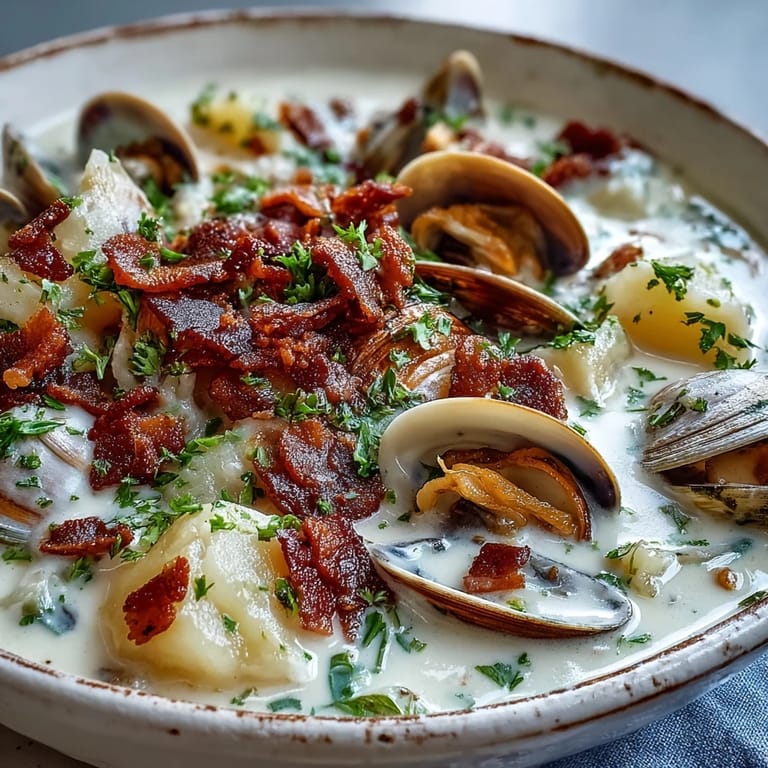
Save I spent a rainy afternoon in a coastal Maine town where the fog was so thick it felt like a blanket. A tiny shack with peeling blue paint served me a bowl that changed my standards forever. It was thick but not gluey and tasted purely of the sea. I realized then that a proper chowder is more about the texture of the potatoes and the sweetness of the clams than anything else. This version is my attempt to capture that gray afternoon in a warm kitchen.
Watching the steam rise from a pot of clams always reminds me of my first time hosting a coastal themed dinner. I was terrified of overcooking them until a neighbor told me to listen for the sound of the shells popping open. We sat on the floor with bowls in our laps because my table was too small for all the guests. That evening taught me that a big pot of soup is the easiest way to make people feel at home.
Ingredients
- Fresh Clams: These are the heart of the dish and provide that fresh ocean flavor that canned versions sometimes miss.
- Salt Pork: Rendering this down creates a smoky base of flavor that acts as the foundation for everything else.
- Yukon Gold Potatoes: I prefer these because they hold their shape better than russets while still releasing just enough starch to thicken the broth.
- Heavy Cream: This is what creates that iconic luxurious mouthfeel that makes New England style so famous.
- Bottled Clam Juice: It adds a concentrated depth of flavor that water alone cannot provide.
Tired of Takeout? 🥡
Get 10 meals you can make faster than delivery arrives. Seriously.
One email. No spam. Unsubscribe anytime.
Instructions
- Prepare the clams:
- Watch for the shells to pop open as they release their briny liquor into the steaming water. Once they are open remove the meat and chop it into bite sized pieces for the soup.
- Crisp the pork:
- Listen for the sizzle as the salt pork turns into golden nuggets and fills the room with a smoky aroma. Remove the bits but keep that liquid gold fat in the pan for the vegetables.
- Sauté the vegetables:
- Stir the onions and celery into the butter and fat until they become soft and smell sweet like a classic seaside kitchen. Add the garlic at the last moment so it perfumes the air without burning.
- Create the base:
- Slowly pour in the liquids while whisking to turn the flour into a thick and velvety sauce. This creates the smooth foundation that holds all the hearty ingredients together.
- Simmer the potatoes:
- Let the pot bubble gently until the potatoes are soft enough to break apart with just a light press of a spoon. This stage is where the broth begins to thicken naturally from the potato starch.
- Final warming:
- Stir in the chopped clams and crispy pork bits but be careful not to let the pot reach a hard boil. This keeps the seafood tender and prevents the cream from separating.
 Save
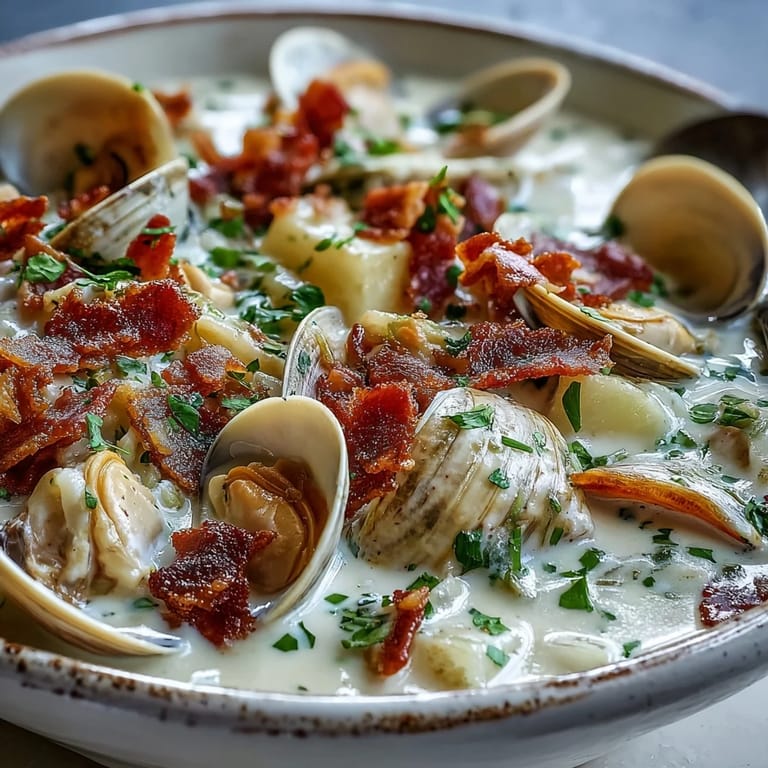
Save There was a winter night when the power went out and we finished cooking this over a camping stove by candlelight. The smell of thyme and bacon filled the dark room and we ate directly from the pot. It turned a cold inconvenience into one of our favorite family stories.
The Potato Texture Secret
I used to cut my potatoes into huge chunks but I found they never quite cooked through evenly. Now I dice them into small uniform cubes so that every spoonful has a bit of potato and a bit of clam. It ensures that the starch is distributed perfectly throughout the creamy base.
Choosing Your Clams
If you cannot find fresh littlenecks do not be afraid to use high quality canned chopped clams. I once used a mix of both and the result was surprisingly deep and flavorful. Just make sure to save every drop of the liquid in the can for the broth.
Serving Your Masterpiece
A bowl of chowder is nothing without the right crunchy accompaniment on the side to provide some contrast. I like to set out a variety of options so everyone can customize their own experience at the table.
- Oyster crackers are the traditional choice for a reason because they stay crunchy in the cream.
- A thick slice of sourdough bread is perfect for mopping up the last drops at the bottom of the bowl.
- Always add a final sprinkle of fresh parsley right before serving to give it a pop of color.
 Save
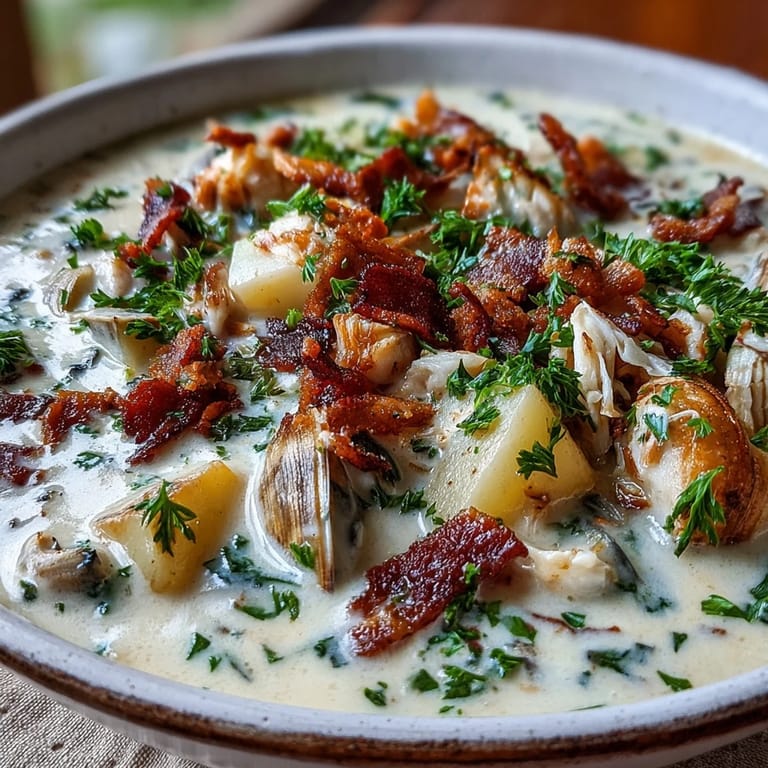
Save This chowder is a reminder that the best meals are often the simplest ones made with patience. I hope it brings a bit of the coast to your kitchen tonight.
Recipe FAQ
- → What's the difference between New England and Manhattan clam chowder?
New England clam chowder is creamy and white, made with a milk or cream base, while Manhattan version is tomato-based and red. The New England style also traditionally uses salt pork for richness, whereas Manhattan often relies on bacon or no pork at all.
- → Can I use canned clams instead of fresh?
Absolutely. Canned chopped clams work beautifully in this chowder. Use the juice from the cans as part of your clam juice measurement, and add the clams during the last few minutes of simmering just to heat through.
- → How do I prevent the dairy from curdling?
Always add your milk and cream after the roux is fully cooked and whisked with clam juice. Keep the heat at a gentle simmer—never boil—once dairy is added. Also, avoid highly acidic ingredients that could cause separation.
- → Can I make this ahead of time?
The flavor actually improves overnight. Prepare the chowder completely, cool it quickly, and refrigerate for up to 3 days. When reheating, do so gently over low heat and add a splash of milk or cream if it has thickened too much.
- → What type of potatoes work best?
Yukon Gold or russet potatoes are ideal. They hold their shape during simmering while becoming tender. Avoid waxy varieties like red potatoes, which won't break down enough to contribute to the chowder's creamy texture.
- → Is there a substitute for salt pork?
Thick-cut bacon makes an excellent substitute and is more readily available. Simply dice and render it the same way. For a lighter version, you can omit the pork entirely and use a bit more butter, though you'll lose some depth of flavor.