 Save
Save My neighbor dropped off a bundle of carrots from her garden one April afternoon, and I stood there holding them like I'd just won something precious. That evening, I remembered my grandmother's carrot cake, the one with walnuts that somehow stayed crunchy no matter how moist everything else got. I decided to rebuild it from memory, layering it with cream cheese frosting that tasted like spring itself. The first slice went to that same neighbor, and she came back asking for the recipe before she'd even finished eating.
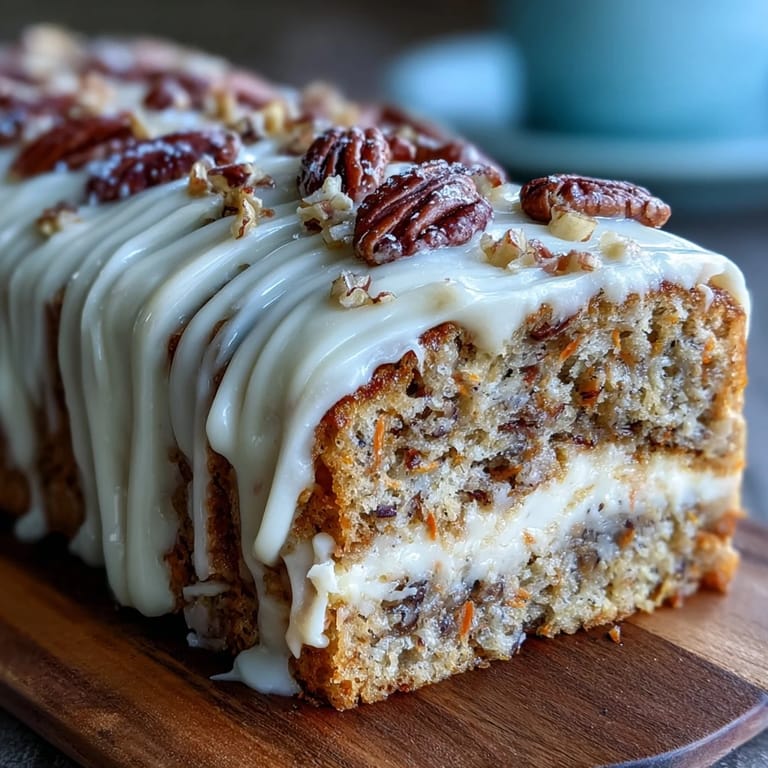
I made this for a spring potluck once where everyone brought something green or pastel, and mine arrived looking like it belonged in a garden itself. Someone cut into it at the party and the room went quiet for that split second before everyone asked for seconds. That's when I knew the ratio of frosting to cake was exactly right, and the layers held together without crumbling like they sometimes do with carrot cake.
Ingredients
- All-purpose flour (2 1/2 cups): This is your structure, and measuring by weight instead of volume keeps the cake tender rather than dense.
- Baking powder and baking soda (2 tsp and 1 1/2 tsp): Together they create a crumb that's light and sturdy enough to hold three layers without collapsing.
- Cinnamon, nutmeg, and ginger (1 tsp, 1/2 tsp, and 1/2 tsp): These warm spices tie everything together, and toasting them briefly in a dry pan before measuring deepens their flavor.
- Eggs (4 large, room temperature): Room temperature eggs emulsify better with the oil, creating that signature moist crumb carrot cake is famous for.
- Granulated and brown sugar (1 1/2 cups and 1/2 cup): The brown sugar adds moisture and depth that granulated sugar alone can't achieve.
- Vegetable oil and applesauce (1 cup and 1/2 cup): Oil keeps the cake tender, but applesauce prevents it from feeling greasy or heavy on the palate.
- Vanilla extract (2 tsp): Use real vanilla here because you're adding so much liquid that imitation can taste a bit sharp.
- Finely grated carrots (3 cups): The finer you grate them, the more evenly they distribute and the moister your cake becomes.
- Chopped walnuts (1 cup): Chop them by hand rather than using a food processor so they stay chunky and stay crunchy even when baked.
- Cream cheese and butter for frosting (16 oz and 1/2 cup): Both must be softened to room temperature or your frosting will break and turn grainy no matter how long you beat it.
- Powdered sugar (4 cups, sifted): Sifting removes lumps that will never fully dissolve, keeping your frosting silky rather than gritty.
Tired of Takeout? 🥡
Get 10 meals you can make faster than delivery arrives. Seriously.
One email. No spam. Unsubscribe anytime.
Instructions
- Set up your stage:
- Preheat to 350°F and grease three 8-inch pans with parchment paper because carrot cake is heavy and you need every advantage to get it out cleanly. This temperature is low enough to bake the centers through without burning the edges, something I learned after making a slightly-crispy version once.
- Blend the dry team:
- Whisk flour, baking powder, baking soda, cinnamon, nutmeg, ginger, and salt in a medium bowl until the spices are evenly distributed. This step is where the magic of even flavor begins.
- Build your wet base:
- Beat eggs with both sugars until the mixture pales and thickens slightly, which takes about three minutes on medium speed. Add oil, applesauce, and vanilla, then mix until you can't see any streaks of oil.
- Marry wet and dry gently:
- Add the dry ingredients to the wet ingredients and mix just until combined, stopping as soon as you don't see flour anymore. Overmixing develops gluten and makes the cake tough, which defeats the whole purpose of using oil instead of butter.
- Fold in the stars:
- Gently fold in the grated carrots and chopped walnuts using a spatula, being careful not to crush the walnut pieces. The folding motion keeps everything light and preserves those crunchy bits.
- Distribute and smooth:
- Divide batter evenly among the three pans and smooth the tops with an offset spatula so they bake evenly. If one pan gets more batter, that layer will be thicker and your cake will lean.
- Bake with patience:
- Bake for 30 to 35 minutes until a toothpick in the center comes out clean or with just a few moist crumbs. The top should spring back slightly when you touch it, and the edges should just barely pull away from the sides of the pan.
- Cool with intention:
- Let cakes rest in the pans for exactly 10 minutes before turning them out onto wire racks, which prevents them from breaking but gets them cooling quickly. Rushing this step can cause sticking, but waiting too long makes them stick even more.
- Make the frosting magic:
- Beat softened cream cheese and butter together until completely smooth and pale, then gradually add sifted powdered sugar while beating so it stays fluffy rather than dense. Add vanilla and a pinch of salt, which you might think is too small to matter until you taste frosting without it.
- Assemble with care:
- Level the cake layers if they domed, then stack them with frosting between each layer and covering the entire outside. Use an offset spatula dipped in hot water and wiped clean for smooth sides.
- Crown your creation:
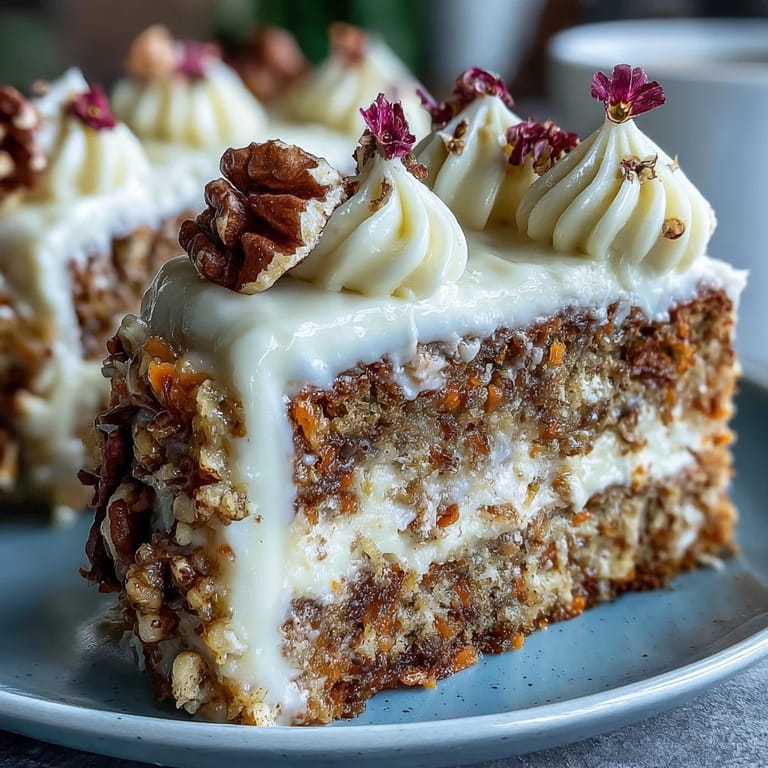
- Scatter extra chopped walnuts on top and add edible flowers or carrot curls if you're feeling celebratory, but the cake is stunning either way.
 Save
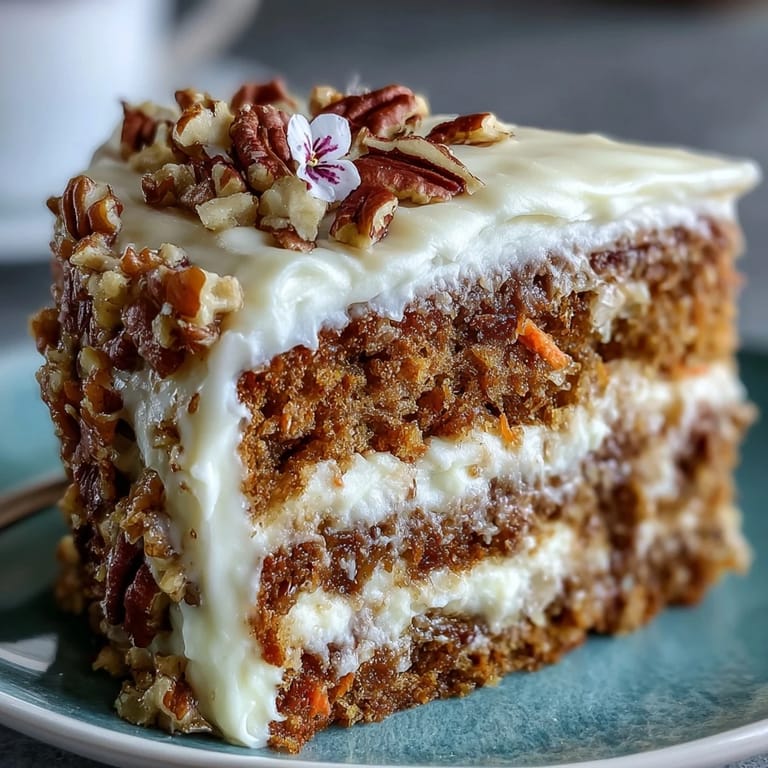
Save There was a moment when I frosted this cake for the first time and realized how satisfying it is to create something so visually balanced—three perfect layers, that soft cream cheese frosting, the promise of spiced moistness inside. My daughter took a photo before we cut into it, which is how I knew it had crossed from being just dessert into being something people wanted to remember.
Why This Cake Works Every Time
The secret is in the ratio of liquid to flour, which is higher than in traditional butter-based cakes. Oil doesn't cream like butter does, so it can carry more moisture without making the crumb fragile. The applesauce adds body that prevents the cake from tasting oily, while the carrots release just enough liquid as they bake to keep everything tender. This is why carrot cake tastes better on day two than day one—the moisture continues to distribute evenly overnight.
The Frosting Formula
Cream cheese frosting can split and break if you rush it, and I learned that lesson the expensive way. The key is starting with both cream cheese and butter at genuine room temperature, beating them together until pale before adding any sugar at all. Adding sugar gradually while beating keeps the frosting smooth and fluffy rather than grainy and dense. Some people add a tablespoon of cornstarch to stabilize it, which helps if your kitchen is warm or if you need to make the cake early in the day.
Variations and Occasions
This cake lives well with additions, depending on what you're celebrating or what you have on hand. Raisins plump up beautifully in the batter and add pockets of sweetness, while chopped dried pineapple brings brightness and a subtle tanginess that plays well with the cream cheese frosting. Some bakers add a handful of shredded coconut, and I've even tried pineapple juice instead of some of the oil for a more tropical lean. The beauty is that the base recipe is sturdy enough to handle these experiments.
- Soak raisins in warm water for five minutes before folding them in so they're plump and tender throughout baking.
- If using dried pineapple, chop it finely and fold it in with the carrots so the pieces stay small and distribute evenly.
- The cake keeps perfectly in an airtight container in the refrigerator for up to four days, and the flavors actually deepen overnight.
 Save
Save This cake has become my answer to spring celebrations, garden potlucks, and moments when I want to bake something that tastes as generous as it looks. It's the kind of dessert that brings people back for seconds and asks for the recipe, which is really all a baker can hope for.
Recipe FAQ
- → What spices are used to flavor the cake?
The cake features ground cinnamon, nutmeg, and ginger for warm, aromatic notes.
- → How are the walnuts incorporated in the layers?
Chopped walnuts are gently folded into the batter, adding crunch and nutty flavor throughout the layers.
- → Can the cake be prepared ahead of time?
Yes, the cake can be refrigerated overnight and brought to room temperature before serving for best results.
- → What is the purpose of applesauce in the batter?
Applesauce adds moisture and a slight natural sweetness, contributing to a tender crumb.
- → How is the frosting made creamy and smooth?
Beating softened cream cheese and butter until smooth, then gradually adding powdered sugar and vanilla, creates the creamy texture.
- → What tools are needed for baking this layered cake?
Three 8-inch round pans, mixing bowls, electric mixer, spatula, wire rack, and a grater are required.