 Save
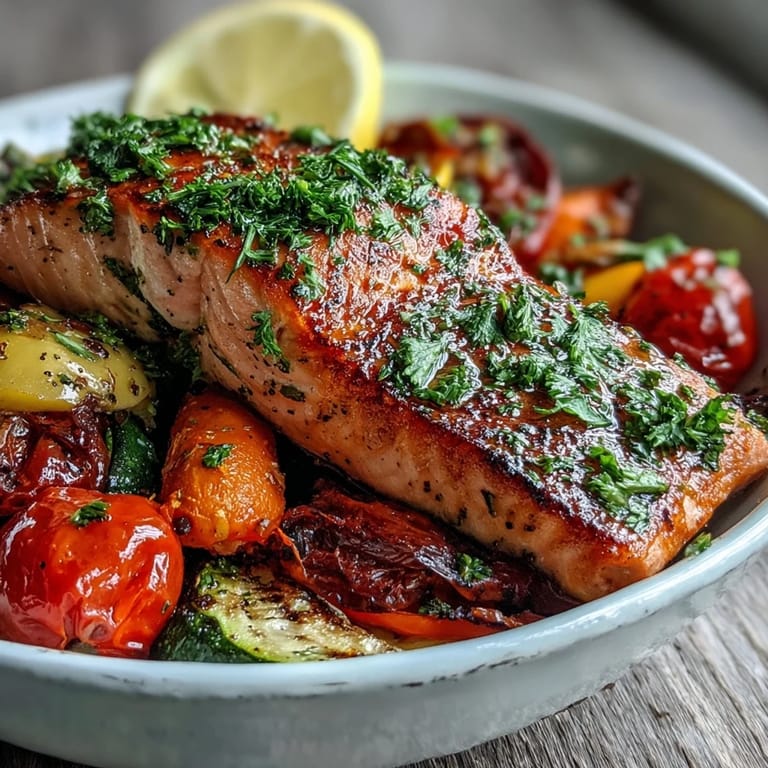
Save Tuesday nights used to feel like a scramble until I discovered that throwing everything on a single sheet pan somehow transforms the chaos into dinner. There's something almost magical about how the salmon's natural oils mingle with caramelized vegetables as they roast together, filling the kitchen with this bright, herbaceous warmth that makes everyone pause and ask what's cooking. This bowl became my answer to the question I dreaded most: what's for dinner when there's no time to think?
I'll never forget my neighbor peeking over the fence as this was roasting, asking if we were having company. When I told her it was just a Tuesday, she laughed and said she'd been ordering takeout on Tuesdays for years. That's when I realized this wasn't just easy—it was the kind of meal that makes you feel like you've got your life together, even when you're just winging it.
Ingredients
- Salmon fillets (4 pieces, 5–6 oz each): The star of the show—choose ones that smell fresh and briny, never fishy, and pat them completely dry before seasoning so they develop a golden exterior.
- Olive oil (3 tablespoons total): A good-quality oil makes a noticeable difference in both the salmon's crust and the vegetable caramelization.
- Lemon zest: Don't skip this or squeeze bottled juice as a substitute—the zest brings a bright, almost floral note that elevates everything.
- Red onion, carrots, bell peppers (red and yellow), zucchini: These vegetables create different textures and heights on the pan, which means some edges get more crispy and caramelized than others—that's exactly what you want.
- Cherry tomatoes: Halving them prevents them from rolling around and helps them release their sweet juices into the pan.
- Dried Italian herbs: A blend of basil, oregano, and thyme works beautifully, but measure generously since dried herbs need a slightly heavier hand than fresh.
- Fresh parsley: Added at the very end, it tastes like a little wake-up call for your palate.
Tired of Takeout? 🥡
Get 10 meals you can make faster than delivery arrives. Seriously.
One email. No spam. Unsubscribe anytime.
Instructions
- Get your oven ready and prep your pan:
- Preheat to 425°F and line your sheet pan with parchment paper or foil—this is the kind of small step that makes cleanup feel almost effortless later. A hot oven is crucial because it ensures the vegetables will caramelize rather than steam.
- Season and spread the vegetables:
- Toss your onion, carrots, peppers, zucchini, and tomatoes with 2 tablespoons olive oil, the dried herbs, salt, and pepper until everything gleams. Spread them in an even layer—crowding them will trap steam and soften the caramelization, so give them space to breathe.
- Give the vegetables a head start:
- Roast for 10 minutes alone so they can begin developing those golden edges. This timing is key because salmon needs less time than denser vegetables.
- Prepare the salmon while vegetables roast:
- Pat your fillets dry with a paper towel, then brush with 1 tablespoon olive oil and sprinkle with lemon zest, salt, and pepper. The dryness matters because moisture is the enemy of a golden crust.
- Nestle the salmon in:
- Open the oven carefully, move some vegetables aside, and place the salmon among them. The residual heat and the vegetables' natural moisture will help keep the salmon juicy while it cooks.
- Roast until everything is golden:
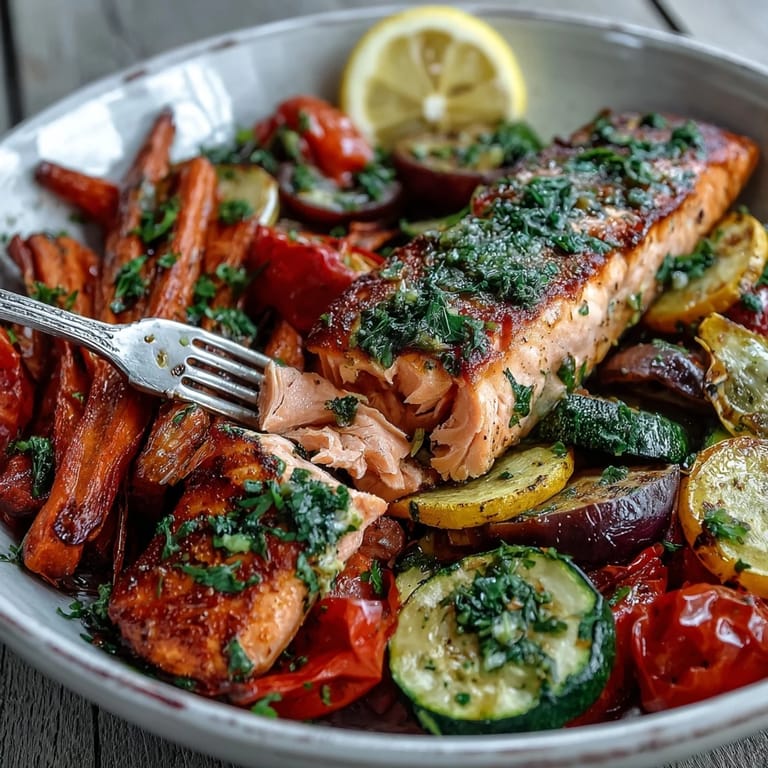
- Continue roasting for 12–15 minutes until the salmon flakes easily with a fork and the vegetables have caramelized edges. You'll know it's done when the salmon's thickest part reaches 145°F, but honestly, the flake test works beautifully if you're not using a thermometer.
- Finish with freshness:
- Pull everything from the oven, scatter chopped parsley over top, and serve with lemon wedges for anyone who wants an extra brightness. The warm lemon against the warm salmon is one of those simple pleasures that makes you understand why citrus was invented.
 Save
Save There was this one Saturday when my kid asked if the vegetables were the "boring part" of dinner, and halfway through eating, they asked for more zucchini. The caramelization, the salt, the slight sweetness that develops in the oven—it changes everything about how vegetables taste. That's the moment this became more than a quick weeknight meal; it became the proof that healthy food doesn't have to taste like punishment.
Variations and Swaps to Keep It Fresh
The beauty of this sheet pan approach is how forgiving it is with seasonal changes. In spring, I swap in asparagus and snap peas; in fall, I lean into roasted Brussels sprouts and butternut squash halves. The cooking times shift slightly depending on vegetable density, so just keep an eye on things and trust what you see rather than the clock.
Building Flavor Layers Beyond the Basics
After the salmon comes out, some nights I drizzle everything with a touch of balsamic glaze, which adds this unexpected sweet and tangy depth. Other times, a crumble of feta cheese scattered over top transforms it into something Mediterranean. I've even experimented with a light Dijon mustard brushed on the salmon before roasting, which creates this subtle savory crust that pairs beautifully with the vegetable sweetness.
Making It Your Own and Serving Suggestions
This dish pairs remarkably well with crisp white wines like Sauvignon Blanc, or if wine isn't your thing, sparkling water with fresh lemon feels equally refreshing. I've served it on its own, over quinoa, alongside crusty bread for soaking up the pan juices, or even cold the next day as a lunch bowl. The flexibility is part of what makes this recipe stay in regular rotation—it adapts to whatever you have and wherever you're eating it.
- Leftover salmon can be flaked and tossed into salads or grain bowls the next day, still tasting fresh and flavorful.
- If you're meal prepping, assemble the vegetables in advance and store them separately from the salmon, which you'll season and cook fresh to prevent overcooking.
- Use a meat thermometer if you're nervous about doneness—salmon at 145°F is perfectly cooked, not a degree more.
 Save
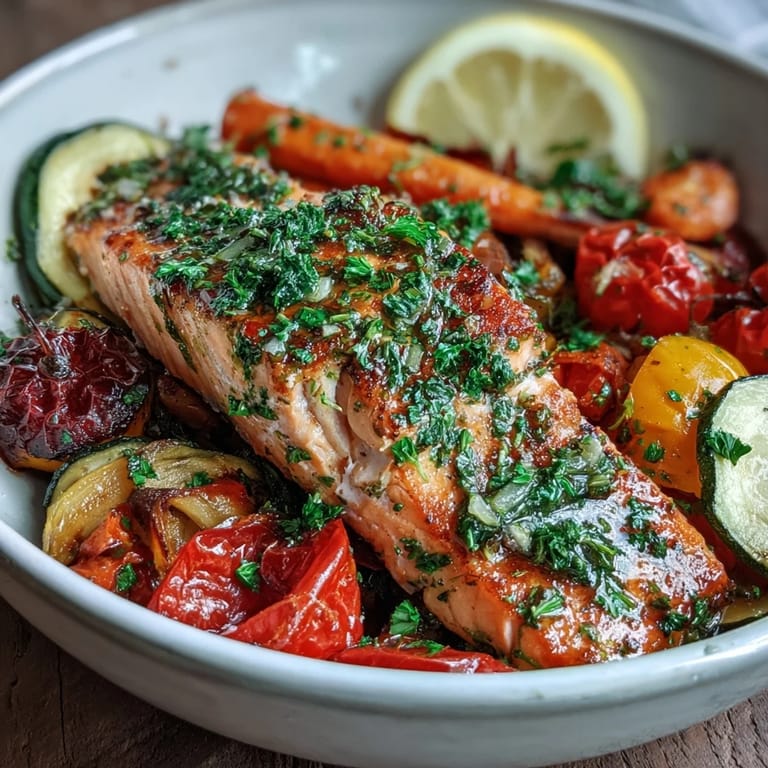
Save There's something deeply satisfying about a meal that comes together quickly but tastes like you spent hours thinking about it. This sheet pan has saved countless Tuesday nights and turned simple ingredients into something worth remembering.
Recipe FAQ
- → What vegetables work best for sheet pan salmon?
Red onion, carrots, bell peppers, zucchini, and cherry tomatoes roast beautifully alongside salmon. You can also substitute asparagus, broccoli, sweet potatoes, or Brussels sprouts based on seasonality and preference.
- → How do I know when the salmon is done?
The salmon is cooked through when it flakes easily with a fork and reaches an internal temperature of 145°F. The flesh should be opaque and separate into moist flakes when gently pressed.
- → Can I use frozen salmon fillets?
Yes, thaw frozen salmon completely in the refrigerator before cooking. Pat the fillets very dry with paper towels to remove excess moisture, which helps achieve better caramelization and prevents steaming.
- → Why roast vegetables before adding salmon?
Vegetables need longer cooking time than salmon. Roasting them for 10 minutes first gives them a head start, ensuring they become tender and caramelized while the fish cooks perfectly without becoming dry.
- → What can I serve with this bowl?
This meal is complete on its own, but you can add cooked quinoa, brown rice, or cauliflower rice underneath. A side of crusty bread or over mixed greens also works well.
- → How do I store leftovers?
Store cooled salmon and vegetables in an airtight container in the refrigerator for up to 3 days. Reheat gently in the oven at 350°F or enjoy cold over salads for lunch.