 Save
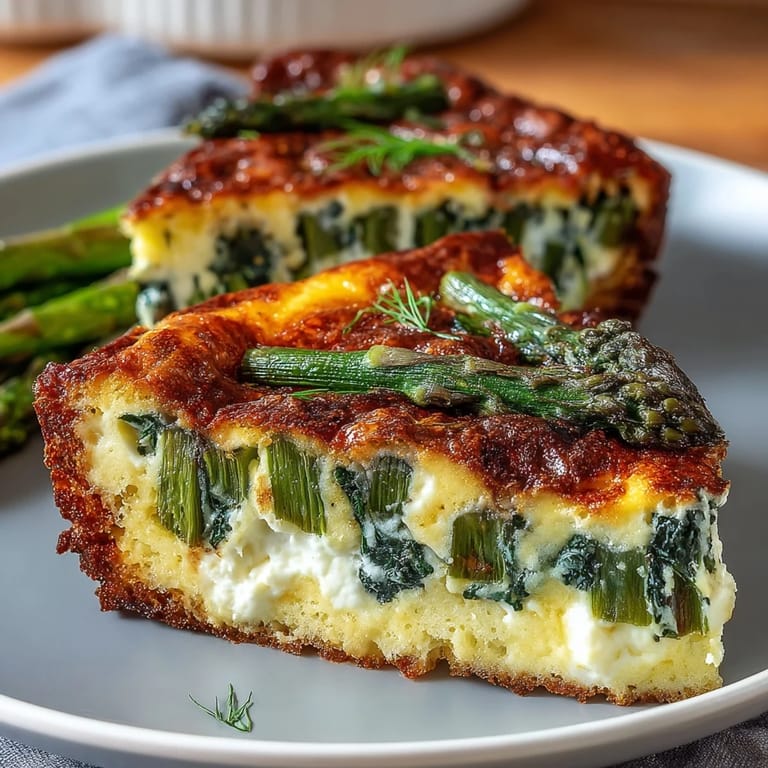
Save My neighbor knocked on my door one Saturday morning with a basket of asparagus from her garden, and I had maybe twenty minutes before friends were stopping by for brunch. I'd never made a frittata before, but something about those bright green spears and a block of goat cheese sitting on my counter felt like fate. What started as improvisation became the dish I now make every spring, when the season shifts and everyone suddenly wants to gather around a table again.
I still think about the first time I served this to my book club—someone asked if I'd gotten it from a restaurant, which felt like a small victory. The way the herbs caught the light and the steam rose from the pan became this quiet moment where everyone paused before eating, and that's when I knew it was the kind of dish worth keeping.
Ingredients
- Asparagus (1 bunch, about 200 g, cut into 2 cm pieces): The star that announces spring has arrived—trim the woody ends by bending each spear until it snaps naturally at its breaking point, which is how you know where the tender part begins.
- Red onion (1 small, finely chopped): Adds a subtle sweetness and slight color, but don't skip the sauté step or you'll taste raw onion bite in every bite.
- Baby spinach (1 cup or 30 g, roughly chopped): Wilts down to almost nothing but brings earthiness and nutrition without weighing the frittata down.
- Eggs (6 large): The foundation—room temperature eggs whisk smoother and create a fluffier texture than cold ones, so let them sit out while you prep vegetables.
- Whole milk (1/4 cup or 60 ml): Just enough to lighten the eggs without making them watery, creating that cloud-like interior.
- Goat cheese (100 g, crumbled): This creamy contrast is non-negotiable—it pockets throughout and adds a subtle tang that balances the fresh vegetables.
- Parmesan cheese (2 tbsp, grated): Brings a savory depth and helps the top turn golden brown in the oven.
- Fresh chives (2 tbsp, finely sliced): Use half in the egg mixture and save the rest for garnish so you get their bright onion flavor twice.
- Fresh dill (1 tbsp, chopped, optional): If you find yourself with fresh dill at the market, grab it—it's the secret that makes people ask what your special ingredient is.
- Salt (1/2 tsp) and freshly ground black pepper (1/4 tsp): Season generously because the eggs will taste flat otherwise, and don't use pre-ground pepper if you can help it.
- Red pepper flakes (pinch, optional): Just a whisper if you like a tiny kick, but truly optional depending on your mood.
- Olive oil (2 tbsp) and unsalted butter (1 tbsp): The combination creates better flavor and prevents sticking better than oil alone.
Tired of Takeout? 🥡
Get 10 meals you can make faster than delivery arrives. Seriously.
One email. No spam. Unsubscribe anytime.
Instructions
- Get your oven ready:
- Preheat to 180°C (350°F) while you prep everything else—this gives the temperature time to stabilize and ensures even cooking.
- Sauté the aromatics:
- Heat olive oil in your ovenproof skillet over medium heat and add the red onion, letting it soften for 2–3 minutes until it turns translucent and smells sweet. You'll know it's ready when it loses that sharp raw bite and becomes almost caramelized at the edges.
- Cook the asparagus:
- Add the asparagus pieces and stir occasionally for 4–5 minutes—you want them tender but still with a tiny bit of resistance when you bite them. This is the tricky part because overcooked asparagus becomes mushy, but undercooked tastes fibrous.
- Wilt in the spinach:
- Toss in the chopped spinach and cook for about 1 minute until it loses its raw look and turns a deeper green. Don't worry that it seems like too much—spinach collapses down to almost nothing.
- Whisk the eggs:
- In a separate bowl, whisk together the eggs, milk, salt, pepper, and half of the chives and dill until you have one pale golden mixture. Take your time here—about 1 minute of whisking incorporates enough air to make the frittata fluffy rather than dense.
- Combine and layer:
- Lower your skillet heat to low and carefully pour the egg mixture over all those cooked vegetables, letting it settle evenly. Dollop the crumbled goat cheese across the surface and sprinkle with Parmesan—don't stir, just let these sit on top.
- Set the edges on the stovetop:
- Leave it undisturbed for 4–5 minutes so the edges begin to set and firm up while the center stays slightly jiggly. You'll see the edges start to pull away from the pan—that's your signal to move to the oven.
- Finish in the oven:
- Transfer the entire skillet to your preheated oven and bake for 10–12 minutes until the center is set but still has a slight shimmer—it should look barely cooked in the very middle. Every oven is different, so start checking at 10 minutes rather than waiting the full 12.
- Rest and garnish:
- Let it sit for 5 minutes in the pan out of the oven—this lets carryover heat set everything without drying it out. Scatter the remaining fresh herbs and a pinch of red pepper flakes on top, then slice into wedges.
 Save
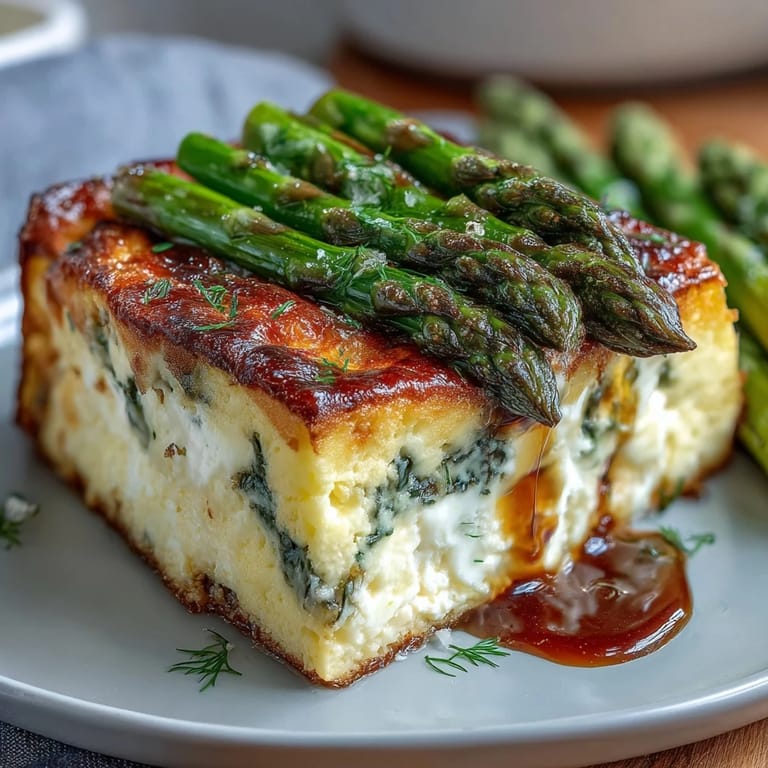
Save The first time I made this for an actual dinner party instead of just brunch, someone asked to take the recipe home, and I realized it had become the thing people remembered about the meal. It wasn't fancy or complicated, but it had this quiet confidence about it, the way it looked golden on the table and somehow made everyone slow down.
Why Spring Vegetables Matter Here
Spring vegetables are fresher and more delicate than their summer counterparts, which means they don't overpower the eggs—they complement them. When I use asparagus from the farmers market that was picked that morning, the difference is noticeable in how tender it becomes and how bright the flavor stays. The spinach adds nutrition without adding heaviness, and together these vegetables create a frittata that feels light enough for warm weather brunch while being substantial enough for an actual meal.
Temperature and Timing Tricks
The stovetop-to-oven method is where most frittata success lives because it gives you two stages of cooking—the bottom sets and browns slightly while the oven gently finishes the center without scrambling the edges. I learned this the hard way by trying to cook everything on the stovetop, which resulted in a burned bottom and runny middle. The key is not to panic when you transfer it to the oven and see that jiggly center—that's exactly what you want because it's still cooking and will set perfectly in those final minutes.
Serving and Storage Wisdom
This dish loves being served warm straight from the pan, but it's equally delicious at room temperature an hour or two later, which is why it's perfect for buffet-style brunch. I've even eaten it cold from the fridge the next morning and found myself just as happy about it. Store any leftovers covered in the fridge for up to 3 days, and reheat gently in a low oven rather than the microwave to avoid rubbery eggs.
- If you're cooking for guests, assemble everything up to the egg-pouring step the night before, then finish cooking in the morning for maximum stress-free entertaining.
- Pair it with a simple green salad, crusty bread, and a crisp white wine or sparkling rosé to make it feel like a celebration even on an ordinary Tuesday.
- Don't be afraid to swap in seasonal vegetables like peas, leeks, or zucchini depending on what your market has—frittata is genuinely forgiving about substitutions as long as you cook harder vegetables first.
 Save
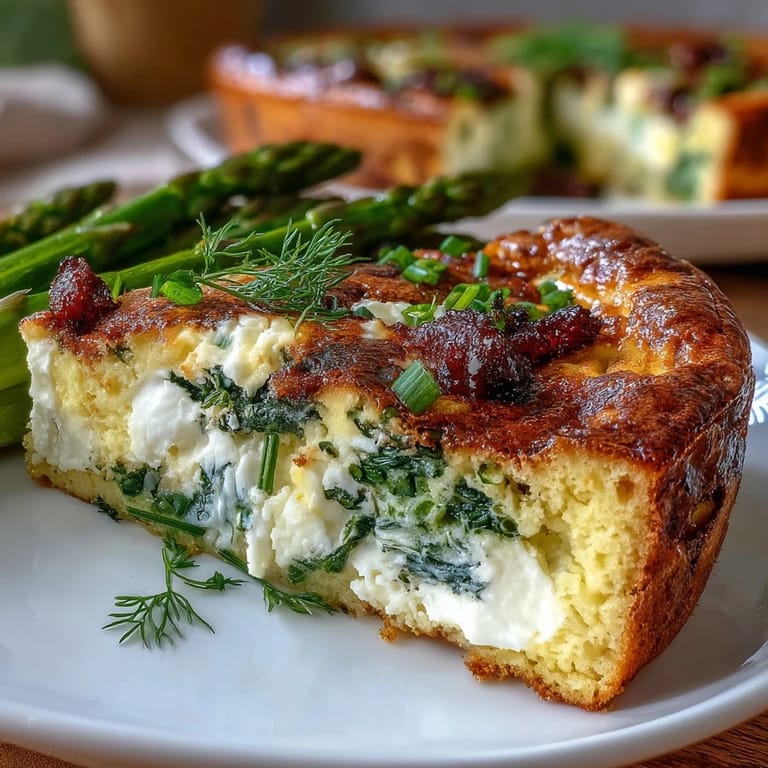
Save This frittata has become my answer to the question of what to cook when people are coming over and you want something that feels special without taking over your whole day. Every time I make it, I remember that morning my neighbor arrived with asparagus and I took a chance on something I'd never done before.
Recipe FAQ
- → Can I use other vegetables instead of asparagus?
Yes, peas, leeks, or even zucchini can be used to add variety and freshness in place of or alongside asparagus.
- → What cheese substitutes work well here?
Feta or ricotta provide different textures and flavors that complement the dish beautifully.
- → How do I ensure the frittata cooks evenly?
Sear the vegetables gently, pour the egg mixture evenly, cook partially on the stovetop, then finish baking to set the center.
- → Is this dish suitable for a gluten-free diet?
Yes, all ingredients are naturally gluten-free, but verify cheese and milk labels if gluten sensitivity is a concern.
- → Can this be served cold or reheated?
It is best served warm or at room temperature but can be lightly reheated without losing texture or flavor.