 Save
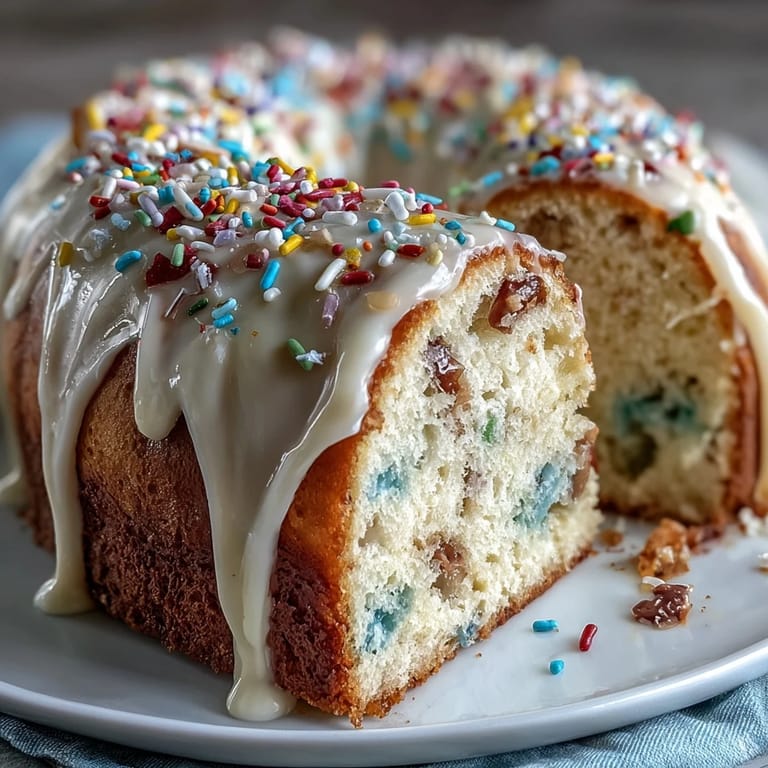
Save My neighbor knocked on my door last spring with a bakery box in hand, asking if I could recreate the rainbow sprinkle cake from her daughter's birthday party. What she didn't know was that I'd been quietly intimidated by layer cakes for years, convinced they'd always come out lopsided or dry. That afternoon, watching the batter fold together with those cheerful bursts of color, something clicked—this wasn't about perfection, it was about celebrating something small and sweet with people who mattered.
I made this cake for a spring potluck last May, and honestly, I was the most nervous about how the buttercream would hold up in the warm kitchen. By the time I arrived, the pastel swirls had softened into this dreamy watercolor effect, and instead of being disappointed, everyone said it looked even better that way. That's when I realized this cake isn't fussy—it's forgiving, and it's actually prettier when it's lived in a little.
Ingredients
- All-purpose flour (2 1/2 cups): The foundation that needs to be whisked with the leaveners first, otherwise your cake won't rise evenly and you'll end up with dense pockets.
- Baking powder and baking soda (2 1/2 tsp and 1/2 tsp): This combination creates lift without making the cake taste metallic—the soda reacts with the sour cream for subtle tang.
- Salt (1/2 tsp): Even in desserts, salt deepens flavor and prevents the sweetness from feeling one-note.
- Unsalted butter (1 cup): Room temperature is non-negotiable here because cold butter won't cream properly and you'll lose all that air you're trying to build in.
- Granulated sugar (1 1/2 cups): The creaming step with butter should take a full three minutes—it's what gives this cake its feathery crumb.
- Large eggs (4): Room temperature so they emulsify smoothly, and adding them one at a time prevents the batter from breaking and becoming grainy.
- Pure vanilla extract (2 tsp): The real stuff matters because imitation extract can taste sharp against the delicate flavor here.
- Whole milk and sour cream (1 cup and 1/2 cup): The sour cream is the secret—it adds moisture and a subtle tang that makes people ask for the recipe.
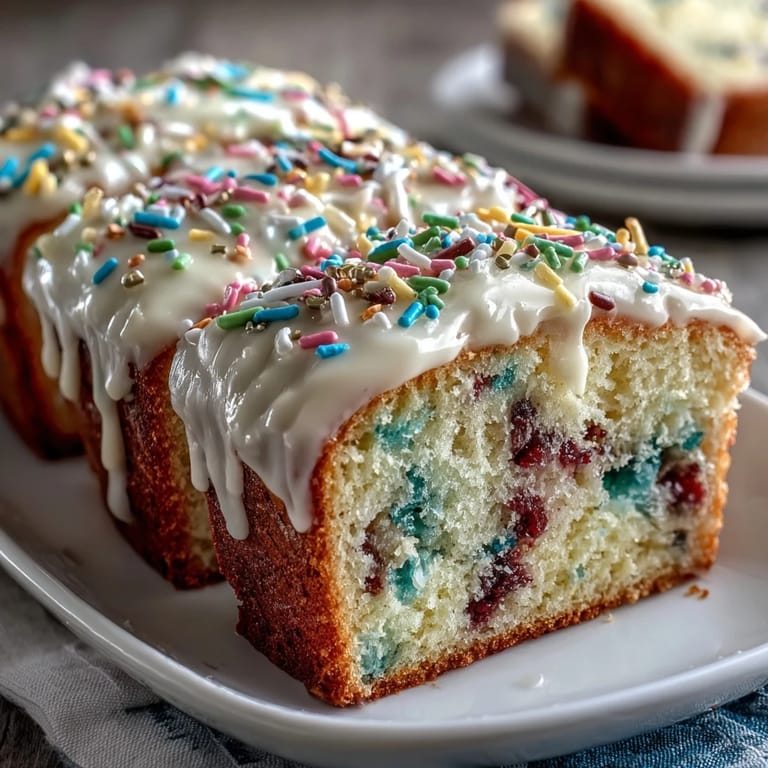
- Rainbow sprinkles (2/3 cup): Use jimmies, not nonpareils, because jimmies fold in without breaking and bleeding color everywhere.
- Unsalted butter for buttercream (1 1/2 cups): Again, room temperature, and you'll notice how smoothly it incorporates when it's soft enough to leave a fingerprint.
- Powdered sugar (5 cups): Sift it first to remove lumps, otherwise your buttercream will have a gritty texture.
- Food coloring gels: Use gel, not liquid, because liquid will make your frosting too thin and watery.
Tired of Takeout? 🥡
Get 10 meals you can make faster than delivery arrives. Seriously.
One email. No spam. Unsubscribe anytime.
Instructions
- Prepare your pans with intention:
- Preheat your oven to 350°F and while it's warming, grease both nine-inch cake pans and line them with parchment paper—this saves heartbreak when you're turning out hot cakes. The parchment is your insurance policy against sticking.
- Build your dry mixture:
- Whisk the flour with baking powder, baking soda, and salt in a medium bowl and set it aside—this pre-mixing ensures the leaveners are evenly distributed, which means your cake rises uniformly. It sounds like a small step but it changes everything.
- Cream butter and sugar until clouds form:
- This is where patience matters; beat the room-temperature butter with sugar for a full three minutes until it's pale and fluffy. You're literally whipping air into the mixture, which becomes the lift in your cake.
- Introduce eggs slowly and deliberately:
- Add one egg at a time, beating well after each addition so the batter stays emulsified and silky. If you rush this, the batter will look broken and grainy.
- Combine the liquid mixture:
- Whisk milk and sour cream together in a separate bowl so they're ready to go. This keeps you from having to measure twice and fumble through the next step.
- Alternate the dry and wet in three parts:
- Start with flour, then add half the milk mixture, then the remaining flour, then the rest of the milk, finishing with flour—this technique prevents overmixing and keeps your crumb tender. Mix just until everything is combined; don't be tempted to keep going.
- Fold in the sprinkles with care:
- Use a rubber spatula to gently fold in the rainbow jimmies so they stay whole and don't bleed color into the batter. The motion should be slow and deliberate, like you're tucking them in.
- Divide and smooth:
- Pour the batter evenly between your pans and use an offset spatula to smooth the tops so they bake evenly. Uneven batter means uneven cake height.
- Bake until golden and set:
- Bake for 28 to 32 minutes; the cake is done when a toothpick inserted in the center comes out clean with just a few crumbs clinging to it. The kitchen will smell like vanilla dreams.
- Cool with patience:
- Let the cakes sit in their pans for ten minutes—this prevents them from breaking apart—then turn them out onto a wire rack to cool completely. Frosting a warm cake is a recipe for melted mess.
- Beat butter until glossy:
- For the buttercream, beat room-temperature butter for about two minutes until it's smooth and creamy. This is the foundation of everything that follows.
- Add powdered sugar gradually:
- Mix it in on low speed so you don't cloud your kitchen with powdered sugar, and keep going until it's all incorporated. Then turn the mixer to high.
- Whip it to fluffy perfection:
- Add milk, vanilla, and a pinch of salt, then beat on high for two to three minutes until the frosting is light and airy. It should look like clouds.
- Tint with restraint:
- Divide the buttercream into four bowls and add just a tiny dab of gel food coloring to each—pastels are subtle, so you don't want them screaming. Start with less color; you can always add more.
- Decorate with joy:
- Once the cakes are completely cool, layer them with buttercream, then dollop or pipe the pastel colors on top and swirl them together. The marbled effect is forgiving and looks beautiful every time.
 Save
Save A few months ago, my daughter's friend asked me to make this cake for her graduation party, and watching their faces light up when I set it down—seeing them reach for seconds without thinking—reminded me that sometimes the best meals are the ones that make people feel celebrated. This cake does that.
The Sour Cream Secret
I learned this by accident when I made the cake without sour cream once because I was out, and the result was drier than I expected despite following everything else perfectly. That's when I understood that sour cream does more than add moisture—it tenderizes the crumb and adds a subtle complexity that makes people pause between bites and wonder what you did differently. You could substitute Greek yogurt if you had to, but honestly, sour cream is exactly what this cake wants to be.
Pastel Colors That Actually Look Good
The first time I used liquid food coloring, the buttercream turned grainy and thin, and I had to start over in a panic. Gel food coloring changed my life—it stays thick and creamy, and because it's concentrated, you only need a tiny amount to achieve that dreamy pastel effect. The colors should look soft and whisper-like, not bold and shouty.
Making It Your Own
Once you understand how this cake works, you can play with it—different extracts, different sprinkle colors, different flavor combinations in the buttercream. I've made it with lemon zest folded into the frosting, and with lavender-tinted pastels, and each version has been genuinely lovely. The formula is solid enough to hold your creativity.
- For cupcakes instead of layers, bake for 22 to 24 minutes and you'll have perfect little parcels of spring.
- If you're making this ahead, the unfrosted cakes freeze beautifully for up to three days wrapped in plastic wrap.
- Pair it with sparkling Moscato or fresh lemonade and suddenly it feels like a real celebration.
 Save
Save This cake isn't just pretty—it's genuinely delicious and approachable enough that even nervous bakers find their rhythm with it. Make it once and you'll make it again.
Recipe FAQ
- → What type of sprinkles work best?
Use jimmies sprinkles to maintain vibrant colors and prevent bleeding throughout baking.
- → Can sour cream be substituted?
Yes, Greek yogurt is a suitable alternative that adds moistness while keeping tangy notes.
- → How should the buttercream be colored?
Divide buttercream into portions and gently blend in pastel food coloring gels for a soft, marbled effect.
- → What is the best way to bake the cake layers?
Bake in greased, parchment-lined pans at 350°F (175°C) for 28–32 minutes, until a toothpick comes out clean.
- → Can this be made into cupcakes?
Yes, baking time adjusts to 22–24 minutes for cupcakes to achieve a moist crumb.