 Save
Save There's a moment every summer when the farmers market tomatoes hit that perfect peak—so ripe they're almost fragile in your hands—and you realize you've been waiting all year for this. That's when caprese salad stopped being something I made and became something I craved. The first time I arranged those warm tomato slices with cold mozzarella, I felt like I'd unlocked some simple Italian secret that had been hiding in plain sight.
I served this at a potluck where everyone brought complicated casseroles, and mine—just tomatoes, cheese, and basil on a platter—somehow became the dish people kept coming back to. Someone asked for the recipe thinking there was some hidden technique, and I realized that the best cooking sometimes isn't about complexity at all.
Ingredients
- Ripe tomatoes (3 large): This is where quality really matters—look for tomatoes that smell fragrant and yield slightly to pressure, ideally in summer when they've actually ripened in the sun.
- Fresh mozzarella (8 oz): The creamy, delicate kind that comes packed in water, never the rubbery pre-shredded version; it should feel soft and slightly warm from the counter before you slice it.
- Fresh basil leaves (1/4 cup): Tear them gently by hand just before serving so they don't bruise and turn dark at the edges.
- Extra-virgin olive oil (2 tbsp): Choose something you actually like tasting straight, because this is where its flavor really shines.
- Balsamic glaze (1–2 tbsp): The thick, syrupy version drizzles so much better than regular vinegar and adds that sweet-tangy finish.
- Sea salt and black pepper: Finish generously; these simple seasonings are the only other flavor you're getting, so don't be shy.
Tired of Takeout? 🥡
Get 10 meals you can make faster than delivery arrives. Seriously.
One email. No spam. Unsubscribe anytime.
Instructions
- Slice and arrange:
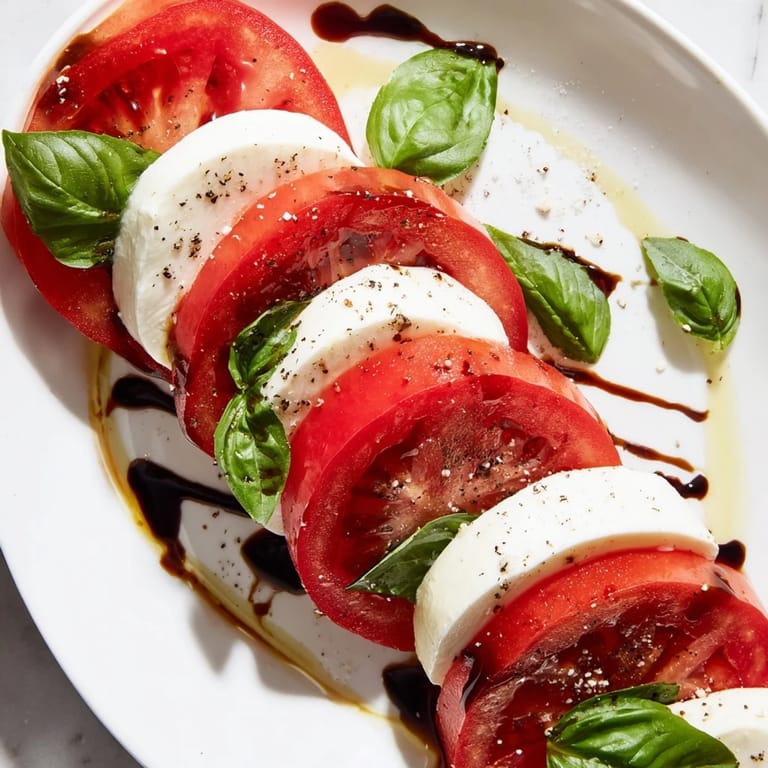
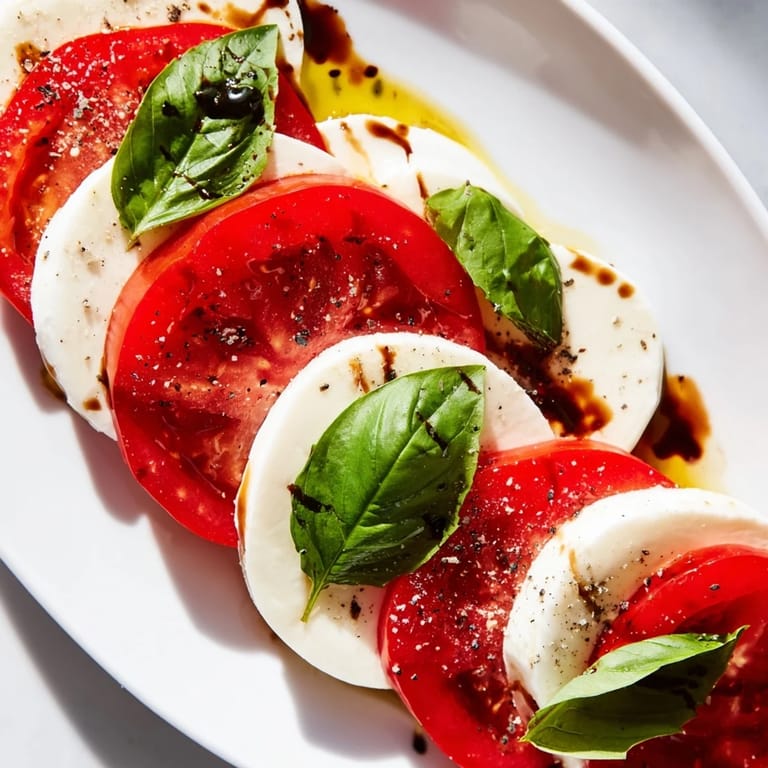
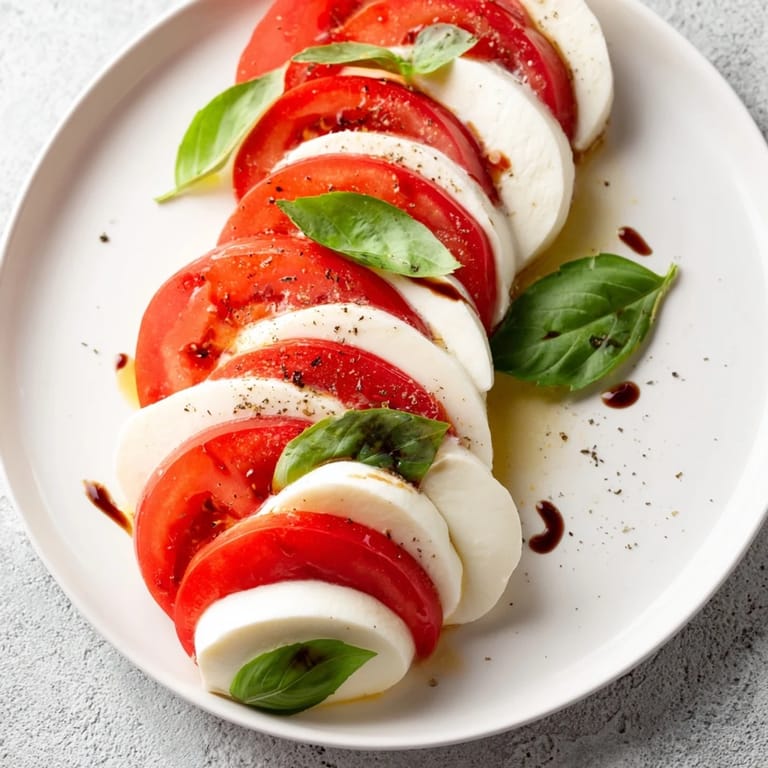
- Cut your tomatoes into thick, even slices and arrange them on a large platter with the mozzarella slices overlapping in a casual pattern—think more beautiful chaos than rigid lines. This only takes a few minutes but sets the whole mood.
- Tuck the basil:
- Slide those tender basil leaves between the tomato and mozzarella where they'll start releasing their fragrance and stay protected until the very last bite. You want people to smell the basil before they taste it.
- Drizzle with intention:
- Pour the olive oil in a thin, even stream across the whole platter, then do the same with the balsamic glaze, letting it pool in little dark puddles. Don't hold back—the oil and glaze are flavor here, not garnish.
- Season to taste:
- Sprinkle salt and pepper directly over everything just before serving so they don't have time to dissolve and disappear. Taste as you go.
 Save
Save My neighbor brought over her garden tomatoes one July afternoon, and we made this together while standing in her kitchen with the screen door open, talking about nothing in particular. That's when I understood that caprese isn't really a recipe—it's an excuse to celebrate good ingredients and share a quiet moment.
Choosing Your Tomatoes
The whole salad lives or dies by the tomato. A pale, mealy supermarket tomato will betray you every time, so hunt for ones that feel substantial in your hand, with that deep tomato smell when you sniff the stem end. In-season heirlooms—those imperfect, oddly-shaped ones—bring color and complexity that makes each bite feel special. If you're making this outside of peak season, honestly, save it for better days; frozen tomato soup exists for winter.
The Mozzarella Question
Fresh mozzarella is temperamental in the best way. It wants to be cool but not cold, sliced but not torn too early, and treated with respect because it's delicate. Some people swear by pulling it straight from the water just before serving, others let it come to room temperature on the counter. I've found that keeping it in its brine until the last minute, then letting it rest in a bowl uncovered for about five minutes, gives you that perfect texture—creamy but still holding its shape. The difference between good mozzarella and mediocre is honestly the difference between this being memorable and this being forgettable.
Making It Your Own
The foundation is sacred—tomato, mozzarella, basil, oil—but the variations are endless if you feel like wandering. Some nights I tear in peppery arugula, other times a whisper of minced garlic scattered across the top, or a handful of Kalamata olives if I'm feeling it. I've even added a few anchovy fillets for guests who wanted something richer, though purists would have opinions about that. The point is, once you understand how these basic elements play together, you can confidently add what your kitchen or mood is asking for.
- Arugula adds a peppery snap that cuts through the richness beautifully.
- A few shavings of Parmesan or a light dusting of red pepper flakes can shift the whole vibe.
- This tastes even better with crusty bread for soaking up the oil and vinegar at the bottom.
 Save
Save This is the kind of dish that teaches you that sometimes the most elegant food is just really good ingredients arranged with care. Make it when tomatoes are at their peak, share it without apology, and watch how something so simple becomes the thing people remember.
Recipe FAQ
- → What type of tomatoes work best?
Choose ripe, in-season tomatoes for juiciness and sweetness. Heirloom varieties add extra color and flavor.
- → Can I substitute mozzarella cheese?
Fresh mozzarella is preferred for its creamy texture, but burrata can be a delicious alternative for added richness.
- → Is balsamic glaze necessary?
Balsamic glaze adds a sweet tangy finish but can be replaced with a drizzle of aged balsamic vinegar if preferred.
- → How should this salad be served?
Serve immediately as a chilled side or appetizer to preserve freshness and texture.
- → Any suggested pairings?
Pairs wonderfully with crusty bread and crisp white wines like Pinot Grigio for a light, balanced meal.