 Save
Save My kitchen smelled like a Texas roadside diner the afternoon I first threw together a proper chili bowl, minus the pretension. A friend had texted asking what I was making for dinner, and I realized I had ground beef, half a pantry of canned goods, and zero plans. What emerged from that pot over the next hour turned into something I keep coming back to, partly because it actually tastes better than it sounds, and partly because you can build it however you want.
There's this unspoken magic in ladling chili over rice for people you care about, watching them pile on cheese and sour cream and cilantro like they're building something. I made this for my roommate when she had a rough week, and she ate two bowls while barely saying anything, which somehow said everything.
Ingredients
- Olive oil: Two tablespoons is your foundation—it carries the flavor of everything that comes next, so don't skip it or swap it for something flavorless.
- Onion and garlic: Dice them smaller rather than larger; they dissolve into the chili and become background sweetness that rounds everything out.
- Bell peppers (red and green): The red ones add natural sweetness while green brings a slight grassiness—use both and you won't regret it.
- Ground beef: A pound of 80/20 ground beef is your best bet; it's not too lean and gives the chili body without being greasy.
- Tomato paste: This two-tablespoon punch concentrates tomato flavor in a way fresh tomatoes never could on their own.
- Canned diced tomatoes: One 15-ounce can is the acid anchor; they keep the chili bright instead of letting it turn muddy and heavy.
- Kidney beans and black beans: One can of each; they add texture and stay firm enough to bite into instead of turning to mush.
- Corn kernels: One cup of fresh, frozen, or canned corn adds unexpected sweetness and a pop of color—don't skip this.
- Spices (chili powder, cumin, smoked paprika, oregano): Toast them in your head before measuring; chili powder brings the heat, cumin adds earthiness, paprika brings smoke, and oregano ties them together.
- Salt, black pepper, and cayenne: Start with the salt and black pepper, then add cayenne only if you want heat; it's a flavor you can't take back.
- Beef or vegetable broth: One cup keeps the chili from turning into a thick stew; it should be spoonable but never soupy.
- Rice or grains: Two cups cooked is your bed; brown rice is earthier than white, and quinoa works if you want to switch things up.
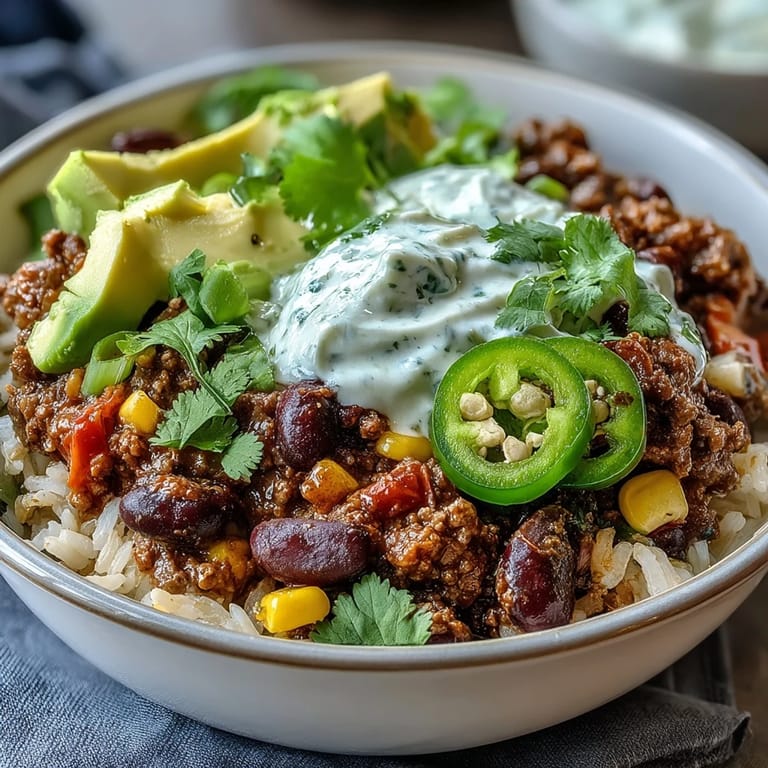
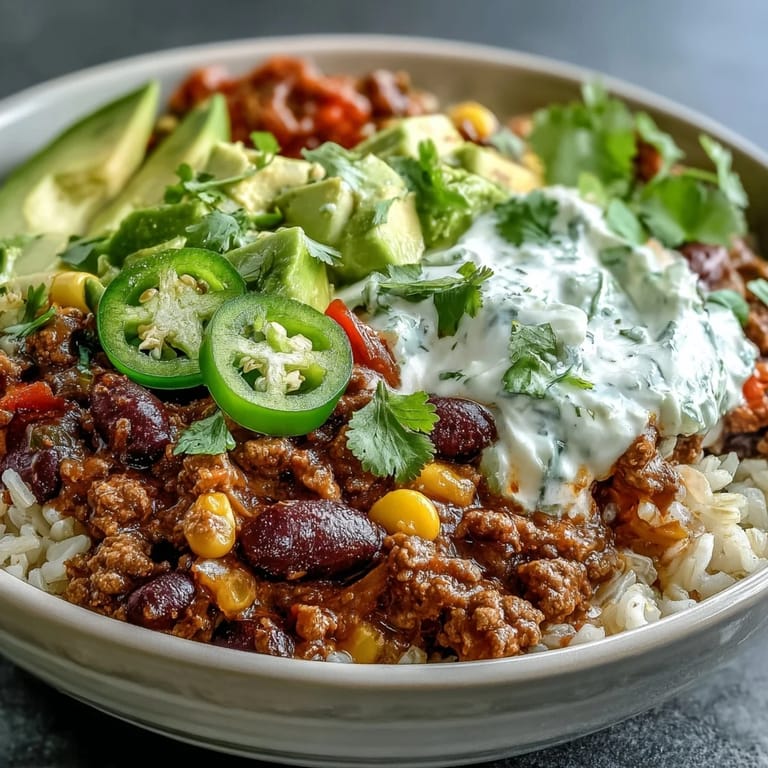
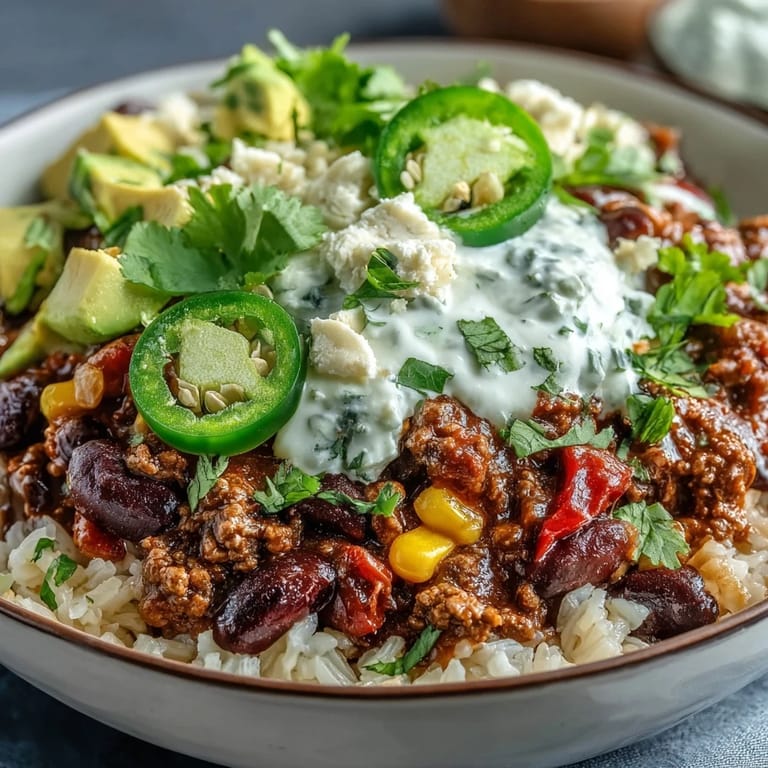
- Toppings: Cheese, sour cream, green onions, cilantro, avocado, jalapeños, and lime wedges—this is where people customize, so put out a few options and let them play.
Tired of Takeout? 🥡
Get 10 meals you can make faster than delivery arrives. Seriously.
One email. No spam. Unsubscribe anytime.
Instructions
- Heat and soften:
- Pour two tablespoons of olive oil into a large pot over medium heat and let it shimmer for about a minute. Dice your onion and throw it in, stirring occasionally until it turns translucent and smells sweet, around two to three minutes.
- Build the base:
- Mince your garlic and dice both bell peppers, then add them to the pot and cook for three to four minutes until the peppers soften slightly. You'll notice the kitchen suddenly smells alive—that's your sign everything is releasing its flavor.
- Brown the meat:
- Crumble the ground beef directly into the pot and cook, stirring and breaking it apart with a wooden spoon, until it's browned and no pink remains, about five to seven minutes. This is not the time to walk away; stay present and stir so nothing sticks.
- Add the tomato paste:
- Stir in two tablespoons of tomato paste and let it cook for about a minute, coating everything in deep red. This brief cooking step actually matters—it mellows the raw tomato taste and lets the flavors marry.
- Layer in the rest:
- Add your canned tomatoes, drained kidney beans, drained black beans, corn, chili powder, cumin, smoked paprika, oregano, salt, pepper, and cayenne if you want heat. Stir everything together until the spices coat all the solids.
- Simmer low and slow:
- Pour in one cup of broth, bring the whole pot to a simmer, then turn the heat down to low and cover it. Let it bubble gently for twenty-five to thirty minutes, stirring occasionally; the longer it sits, the more the flavors fold into each other.
- Prepare your grains:
- While the chili works, cook your rice or grains according to package instructions—rice takes about eighteen minutes, quinoa similar, so timing usually lines up naturally.
- Compose and serve:
- Spoon about a half cup of cooked rice or grains into each bowl, then ladle chili generously over the top and let people add their own toppings. The point is customization, so step back and let them build.
 Save
Save My neighbor once mentioned she'd been eating this chili in different ways all week—over rice, over eggs, mixed into rice and frozen in portions for emergencies. That's when I realized the recipe isn't actually about the chili itself; it's about building something adaptable enough to fit into real life.
Why the Base Matters
The onion, garlic, and bell pepper combination isn't decoration—it's actually the flavor backbone. When you sauté them slowly, they release their natural sugars and become almost caramelized, creating a sweet undertone that keeps the chili from tasting one-dimensional. I once rushed this step because I was impatient, and the chili tasted thin and harsh. The next time I gave it proper time, the difference was undeniable.
Spice Levels and Personal Heat
Chili powder and cayenne are not the same thing, and knowing the difference saved me from one truly spicy mistake. Chili powder is relatively mild and adds flavor; cayenne is pure heat. I start by using only the chili powder, taste, and then add cayenne sparingly to people who want it. Your guests will appreciate not being surprised by fire.
Building and Customizing
The beauty of this bowl is that it adapts to what you have and what people actually want. I've made it with turkey instead of beef when that's what was on sale, added extra beans for a vegetarian friend, and once used farro instead of rice because brown rice had run out. Every version has been good because the chili itself is solid.
- Set out toppings in small bowls so people can see what's available without having to ask.
- If you're feeding a crowd, cook the grains separately so you can reheat chili and grains independently.
- Leftover chili actually tastes better the next day, so don't hesitate to make this a day ahead.
 Save
Save This chili bowl has become my answer to the question "what should I make?" when I want something nourishing, unfussy, and genuinely good. It asks very little of you and gives back a lot.
Recipe FAQ
- → Can I make this chili bowl vegetarian?
Absolutely. Substitute the ground beef with plant-based meat crumbles or simply add an extra can of beans. The hearty combination of kidney beans, black beans, and corn provides plenty of protein and texture.
- → What grains work best as a base?
White rice cooks quickly and absorbs the flavorful juices beautifully. Brown rice adds nutty flavor and extra fiber. Quinoa, farro, bulgur, and barley also work wonderfully for variety and different nutritional benefits.
- → How can I adjust the spice level?
Start with the suggested amount of chili powder and cayenne. For mild flavor, omit the cayenne entirely. To increase heat, add more cayenne, chopped jalapeños, or a dash of hot sauce when serving.
- → How long does this chili bowl keep?
Stored in airtight containers, the chili keeps well for 4-5 days in the refrigerator. The flavors actually improve after a day or two. It also freezes beautifully for up to 3 months.
- → What toppings complement this dish?
Classic garnishes include shredded cheddar cheese, sour cream or Greek yogurt, sliced green onions, fresh cilantro, diced avocado, jalapeño slices, and lime wedges. Cornbread makes an excellent side.
- → Can I make this in a slow cooker?
Yes. Brown the beef and sauté the vegetables first, then transfer everything to your slow cooker. Cook on low for 6-7 hours or on high for 3-4 hours until flavors meld together.