 Save
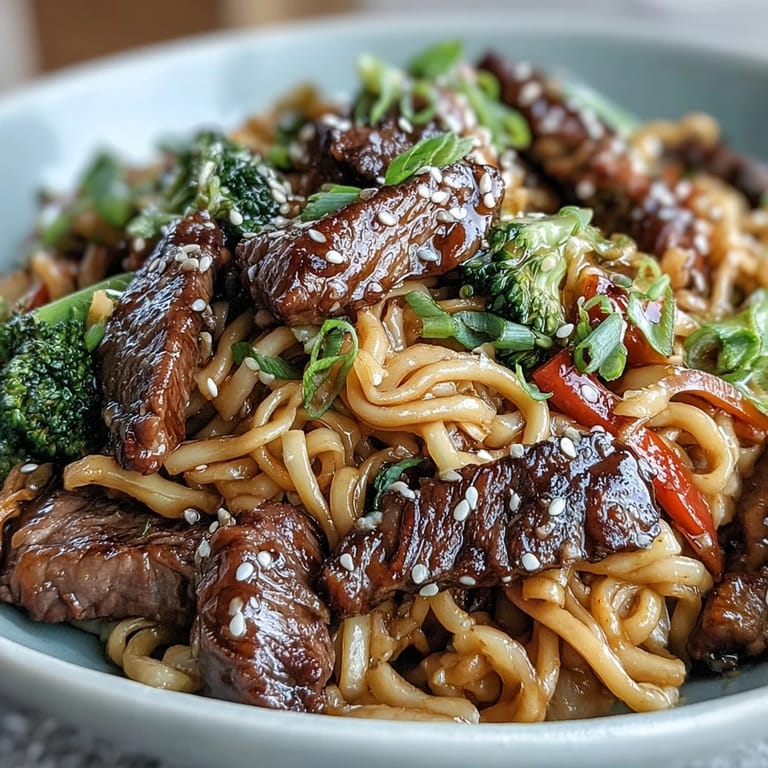
Save There's a particular Tuesday evening I won't forget—my partner came home asking for something warm but not heavy, and I had flank steak and rice noodles sitting in the pantry. What emerged from that skillet in the next twenty minutes felt like a small kitchen victory, the kind where garlic and ginger perfume fills every corner and suddenly you're serving something that tastes like it took hours. This Korean-inspired bowl became our weeknight staple, the one we make when we want restaurant-quality flavors without the fuss or the delivery fee.
I made this for friends one Friday, and watching their faces when they twirled noodles onto their forks—that moment when someone realizes homemade can rival takeout—made me understand why I keep coming back to this recipe. One friend actually asked for the recipe that night, which felt like the highest compliment a home cook could receive.
Ingredients
- Rice noodles (8 ounces): These delicate strands absorb the sauce beautifully without getting mushy, though cooking them slightly undercooked gives you more control when they finish cooking in the skillet.
- Flank steak (1 pound, thinly sliced against the grain): Slicing against the grain is non-negotiable here—it breaks down the muscle fibers and makes every bite tender rather than chewy.
- Broccoli florets (1 cup): They hold their texture through the high-heat cooking and provide a pleasant contrast to the soft noodles.
- Bell pepper, red or yellow (1), sliced: The sweetness balances the salty-savory sauce, and the color makes the whole bowl feel alive.
- Carrot, julienned (1): Thin julienne cuts cook quickly and add a subtle sweetness and crunch that you don't want to miss.
- Green onions (2), chopped: Save these for garnish at the very end so they stay bright and fresh against the warm noodles.
- Garlic, minced (3 cloves): Mince it finely so it distributes evenly and doesn't leave any bitter burnt bits in the pan.
- Ginger, grated (1 teaspoon): Grating rather than mincing releases more of those aromatic oils that make this dish smell incredible.
- Soy sauce (1/3 cup): This is your umami backbone—don't skimp on quality here, as it's a main flavor driver.
- Brown sugar (2 tablespoons): The sweetness rounds out the salty soy and creates that glossy, appealing finish on the noodles.
- Sesame oil (1 tablespoon): A little goes a long way with sesame oil, and its nutty warmth transforms the whole dish.
- Vegetable oil (2 tablespoons): Use something with a high smoke point so you can get that proper sear on the beef without the oil breaking down.
- Sesame seeds, for garnish: Toast them lightly in a dry pan beforehand if you have time—it deepens their flavor and makes them more than just decoration.
Tired of Takeout? 🥡
Get 10 meals you can make faster than delivery arrives. Seriously.
One email. No spam. Unsubscribe anytime.
Instructions
- Start the noodles:
- Put a pot of water on to boil and cook your rice noodles according to the package—usually around 8 minutes—then drain and set them aside. Having them ready before you start the stir-fry prevents any scrambling while the skillet is hot.
- Heat your pan properly:
- Pour vegetable oil into a large skillet or wok and let it get properly hot over medium-high heat until you see a shimmer. This is your signal that the pan is ready to sear the beef without sticking.
- Sear the beef:
- Once the oil is hot, add your thinly sliced flank steak in a single layer and resist the urge to move it around—let it sit for 2 to 3 minutes until it develops a golden crust. You want that Maillard reaction happening, which is where all the flavor comes from.
- Build your aromatics:
- Remove the beef to a plate and immediately add minced garlic and grated ginger to the same hot pan, stirring constantly for about 30 seconds until the aroma hits you like a wave. Don't let it burn; that bitter edge ruins everything.
- Cook your vegetables:
- Throw in the broccoli, bell pepper, and carrot all at once and stir-fry for about 5 minutes until they've softened slightly but still have that satisfying crunch. You're going for tender-crisp, not limp.
- Mix the sauce:
- While the vegetables cook, combine soy sauce, brown sugar, and sesame oil in a small bowl and stir until the sugar completely dissolves. This only takes a minute and prevents grittiness later.
- Bring it together:
- Return the beef to the skillet and pour the sauce over everything, stirring gently so every vegetable and piece of beef gets coated in that glossy mixture. This is where it goes from good to restaurant-quality.
- Add the noodles:
- Toss in your cooked rice noodles and gently toss everything together for about 2 minutes until the noodles are heated through and evenly coated. Don't be too aggressive—you're looking to combine, not to mash.
- Finish with flourish:
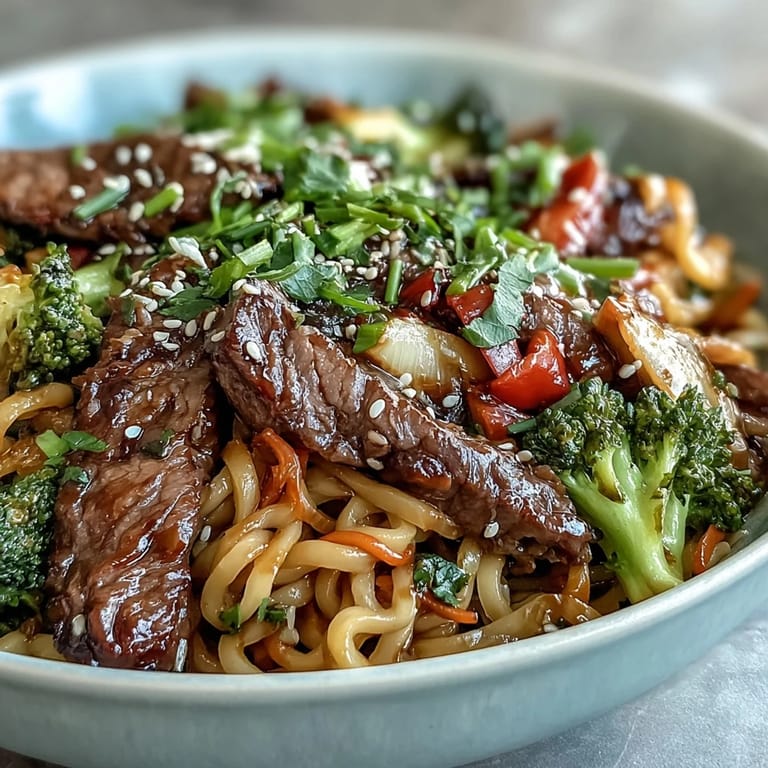
- Transfer to bowls and scatter chopped green onions and sesame seeds over the top right before serving. These final touches add freshness and texture that make each bite feel intentional.
 Save
Save What strikes me most about this dish is how it transformed from a quick weeknight dinner into something I make for people I want to impress. There's something about serving food you made yourself that tastes this polished—it changes the whole mood of a meal.
Timing Your Ingredients for Success
The key to this recipe running smoothly is understanding that everything needs to be prepped before you touch the skillet. I learned this when I started chopping vegetables mid-stir-fry and ended up with overcooked broccoli and undercooked beef—not a happy combination. Now I line up my ingredients like I'm about to perform surgery: noodles cooked and drained, beef sliced, vegetables cut, aromatics minced, and sauce mixed. When everything is ready, the actual cooking moves so fast and feels so controlled.
Making It Your Own
This recipe is forgiving in wonderful ways, which is why it became a rotation favorite in my kitchen. Swap the beef for chicken thighs—they're forgiving and stay juicy. Trade broccoli for snap peas or add zucchini if that's what you have. The sauce is the backbone that holds everything together, so as long as you respect those proportions, you can play with vegetables endlessly.
Storage and Leftovers
This dish keeps beautifully in the fridge for up to three days, which is why I often make a double batch. The flavors actually deepen a bit as they sit, and reheating in a skillet with a splash of water brings it right back to life. Cold leftovers are also surprisingly good eaten straight from the container the next day, though not quite as dramatic as the first serving.
- Store in an airtight container separate from the noodles if you're planning to keep it longer than a day, to prevent them from absorbing too much moisture.
- Reheat gently in a skillet over medium heat with a tablespoon of water to refresh the sauce and prevent sticking.
- For extra spice on your leftovers, drizzle a little sriracha or gochujang right before eating—it's never too late to customize.
 Save
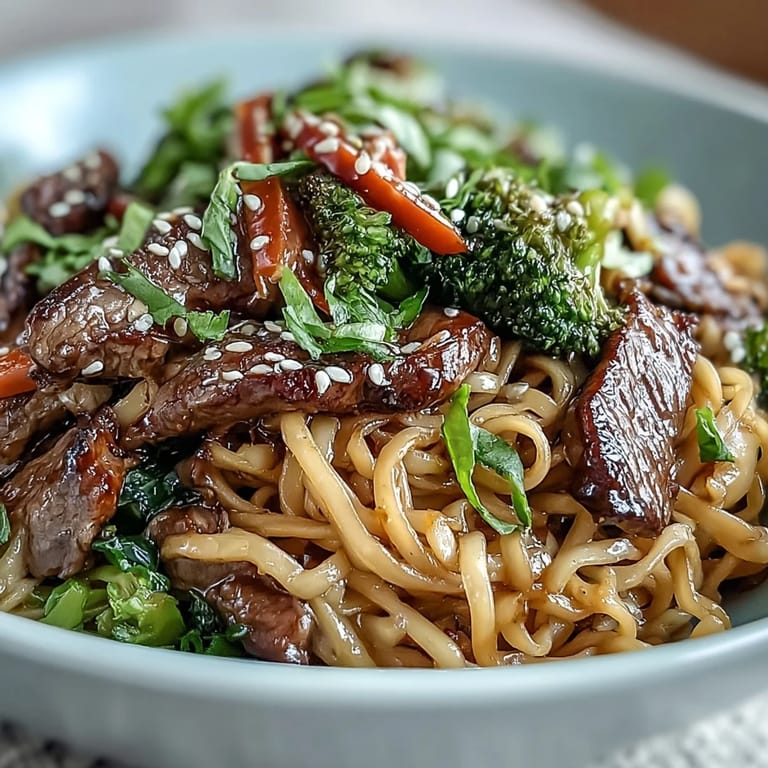
Save This recipe reminds me why I love cooking at home: the control, the smell, the moment when everything comes together in one skillet. Serve it tonight and taste how simple ingredients become something that feels special.
Recipe FAQ
- → What cut of beef works best?
Flank steak sliced thinly against the grain delivers tenderness. Skirt steak or sirloin also work well when cut properly.
- → Can I make this dish spicy?
Stir in sriracha or gochujang to the sauce mixture. Start with one teaspoon and adjust to your preferred heat level.
- → How do I prevent soggy noodles?
Cook rice noodles until just al dente, drain immediately, and toss with the sauce right before serving to maintain texture.
- → What vegetables can I add?
Snap peas, zucchini, mushrooms, bok choy, or baby corn all complement the flavors. Add heartier vegetables earlier in the stir-fry process.
- → Can I prepare components ahead?
Slice vegetables and beef up to a day in advance. Mix the sauce ahead and store refrigerated. Cook everything fresh for best texture.
- → Is this gluten-free?
Use certified gluten-free rice noodles and tamari instead of soy sauce. Check all ingredient labels to ensure no gluten-containing additives.