 Save
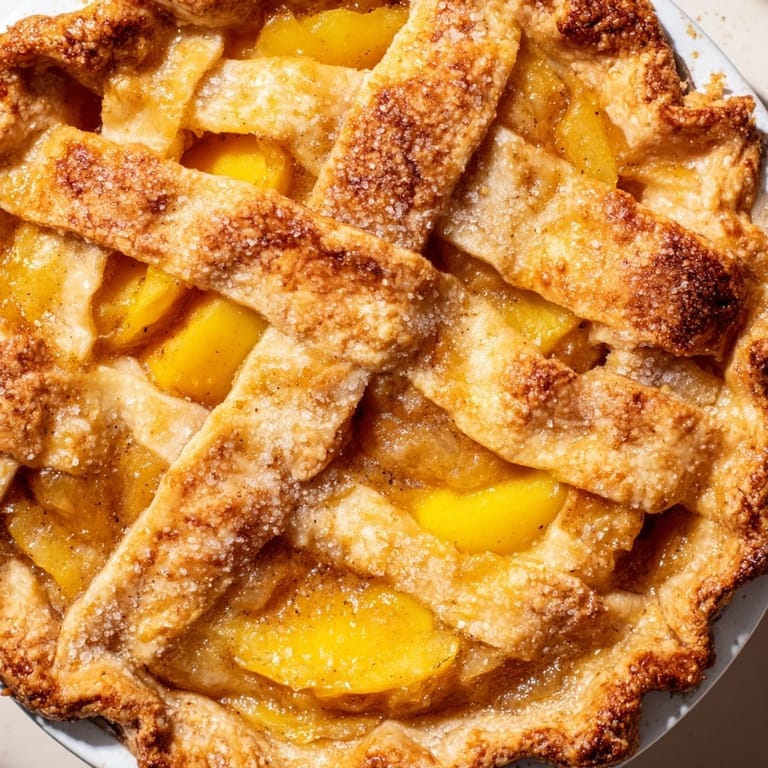
Save I baked my first peach pie on a muggy August afternoon when the kitchen windows were wide open and the air smelled like cut grass. My neighbor had dropped off a basket of peaches still warm from the sun, and I didn't have a plan, just a vague memory of my grandmother's crimped crust. The dough stuck to the counter, the filling leaked everywhere, and I burned my thumb on the oven rack. But when I pulled that pie out, golden and bubbling, I felt something shift—like I'd just unlocked a summer tradition I didn't know I was missing.
The second time I made this, I brought it to a potluck and watched people go quiet after the first bite. Someone asked if I'd used a secret ingredient, and I realized the secret was just ripe fruit and enough butter to make you forget your troubles. A friend scraped her plate clean and told me it tasted like her childhood, even though we grew up in different states. That's when I understood why people get sentimental about pie.
Ingredients
- All-purpose flour: The backbone of your crust, and it needs to stay cold so the butter doesn't melt before baking—that's what creates those flaky layers you're after.
- Unsalted butter, cold and cubed: This is non-negotiable for flakiness, and cutting it into pea-sized pieces by hand gives you more control than a food processor ever will.
- Salt: Just enough to wake up the sweetness without tasting salty, and it makes the crust taste like something instead of just a vessel.
- Granulated sugar (for crust): A tablespoon keeps the dough tender and adds a whisper of sweetness that balances the fruit.
- Ice water: The colder the better, because warm water activates gluten and turns your dough tough and chewy instead of tender.
- Ripe peaches, peeled and sliced: Look for peaches that give slightly when you press them and smell sweet at the stem end, because underripe fruit will bake up tasteless and firm.
- Granulated sugar (for filling): This amount works for most peaches, but if yours are especially tart, add another tablespoon or two without guilt.
- Cornstarch: It thickens the juices so your pie slices cleanly instead of flooding the plate, and it works better than flour for fruit pies.
- Lemon juice: Brightens the peach flavor and keeps the fruit from tasting flat or one-dimensional.
- Ground cinnamon: Just half a teaspoon adds warmth without making it taste like a spice cake.
- Ground nutmeg: A quarter teaspoon is all you need for that barely-there complexity that makes people wonder what you did differently.
- Vanilla extract: It deepens the sweetness and makes the whole filling taste more rounded and complete.
- Egg (for wash): Beaten with a splash of water, it gives the crust that glossy, bakery-perfect shine.
- Coarse sugar: Optional but worth it for the sparkle and the slight crunch on top.
Tired of Takeout? 🥡
Get 10 meals you can make faster than delivery arrives. Seriously.
One email. No spam. Unsubscribe anytime.
Instructions
- Make the dough:
- Whisk your dry ingredients, then work the cold butter in with your fingertips or a pastry cutter until it looks like wet sand with some pea-sized lumps still hanging on. Add ice water a tablespoon at a time, mixing gently until the dough barely holds together, then divide it in half, pat into discs, wrap tightly, and chill for at least an hour so the gluten relaxes and the butter firms back up.
- Prepare the filling:
- Toss your peach slices with sugar, cornstarch, lemon juice, spices, salt, and vanilla in a big bowl, then let it sit for ten minutes so the juices start to release and the cornstarch can do its job. The mixture will look soupy, but don't panic—it will thicken beautifully in the oven.
- Preheat and roll:
- Get your oven to 400°F, then roll out one disc of dough on a floured surface until it's about 12 inches across and drape it gently into your pie dish, letting the excess hang over the edges. Don't stretch it or it will shrink back when it bakes.
- Fill and top:
- Pour the peach mixture into the crust, spreading it evenly, then roll out the second disc and lay it over the top. Trim the overhang to about an inch, fold the edges under, and crimp them however you like—fork tines work just fine if you're not feeling fancy.
- Vent and glaze:
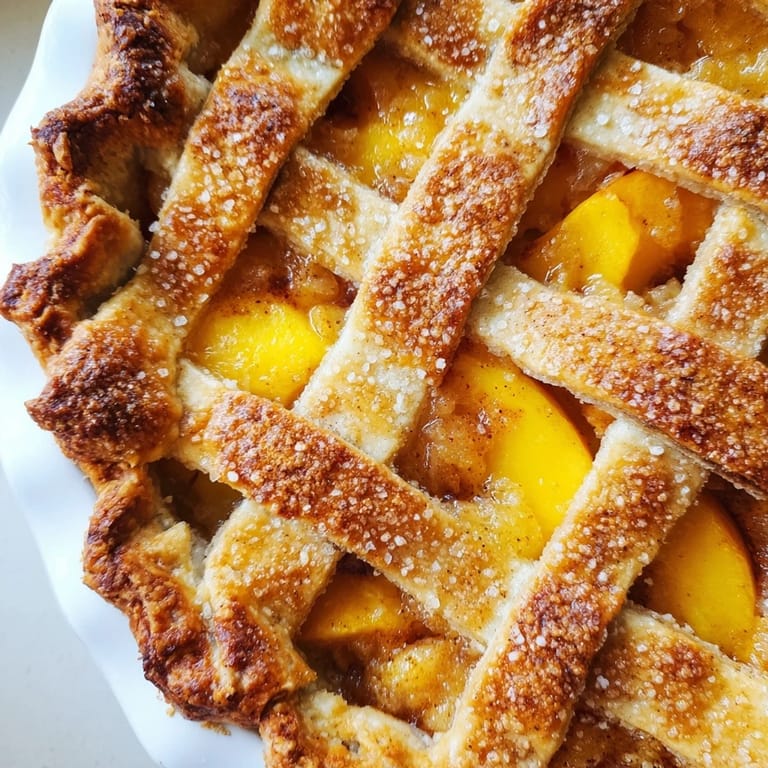
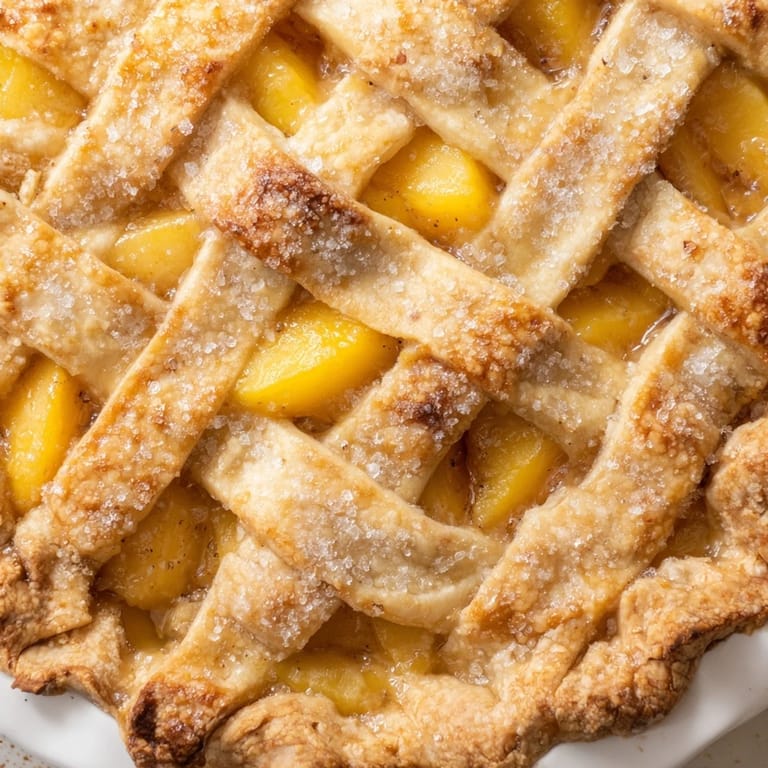
- Cut a few slits in the top crust so steam can escape, or go for a lattice if you're feeling ambitious. Brush the whole surface with beaten egg and scatter coarse sugar over it for that bakery look.
- Bake and cool:
- Slide the pie into the oven and bake for 50 minutes, checking halfway through to cover the edges with foil if they're browning too fast. You'll know it's done when the crust is deep golden and the filling is bubbling through the vents, then let it cool on a rack for at least two hours so the filling sets up and doesn't run everywhere when you slice it.
 Save
Save One evening I served this pie still barely warm, and my brother-in-law, who never says much, asked for a second slice before he'd finished the first. His kids fought over the last piece, and my sister whispered that she hadn't seen him that happy in weeks. It's just pie, I thought, but then I realized that sometimes just pie is enough.
Choosing Your Peaches
I used to think any peach would work, but I learned the hard way that rock-hard grocery store peaches will stay flavorless and firm no matter how long they bake. Look for fruit that smells sweet and gives just a little when you press near the stem, and if you can, mix yellow and white peaches for a more interesting flavor. If your peaches are slightly underripe, leave them on the counter for a day or two until they soften, because baking won't magically ripen them.
Getting the Crust Right
The first time I made pie dough, I added too much water and ended up with a sticky, elastic mess that baked up dense and crumbly. Now I add water a tablespoon at a time and stop the second the dough holds together when I pinch it, even if it still looks a little shaggy. Cold butter is everything—if your kitchen is hot, chill the flour and the bowl too, and work quickly so the butter doesn't soften before it hits the oven.
Serving and Storing
This pie is perfect with vanilla ice cream melting into the warm filling, or a dollop of whipped cream if you're feeling fancy. Leftovers keep at room temperature for a day or in the fridge for up to three days, though the crust will soften a bit in the cold. I reheat slices in a 350°F oven for ten minutes to crisp up the bottom crust again, and it tastes almost as good as the day I baked it.
- If you want to make this ahead, assemble the whole pie and freeze it unbaked, then bake straight from the freezer, adding an extra 10 to 15 minutes to the time.
- A mix of peach varieties gives you more depth of flavor than using just one kind.
- If the filling looks too loose after cooling, don't worry—it will firm up more as it sits, and a slightly soft pie still tastes incredible.
 Save
Save I hope this pie becomes one of those recipes you make every summer without thinking, the kind that fills your kitchen with the smell of butter and fruit and makes people lean against the counter waiting for it to cool. There's nothing fancy about it, just good ingredients and a little patience, and that's usually all you need.
Recipe FAQ
- → What type of peaches work best?
Using a mix of yellow and white peaches enhances flavor complexity and sweetness.
- → How do I make a flaky crust?
Keep butter cold and mix lightly with flour to create coarse crumbs before adding ice water carefully.
- → Why add cinnamon and nutmeg?
These spices bring warmth and depth to the peach filling, balancing the sweetness.
- → How can I prevent a soggy bottom crust?
Blind baking the crust briefly or ensuring the filling isn’t too wet helps keep the crust crisp.
- → What’s the best way to serve this dessert?
Serving it warm with vanilla ice cream creates a perfect contrast of hot and cold textures.