 Save
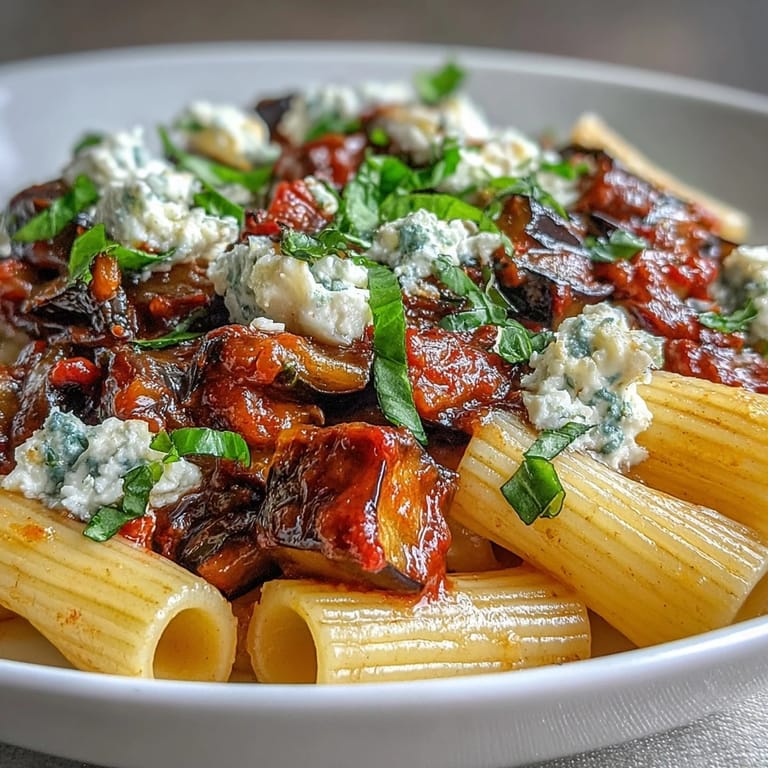
Save There's a particular kind of magic that happens when you roast eggplant until its edges turn golden and the flesh becomes creamy—I discovered it by accident one summer afternoon in Sicily, when a friend's grandmother casually threw cubed eggplant into a hot oven while she stirred her tomato sauce. No fuss, no recipe book, just muscle memory and the smell of garlic hitting hot oil. That single moment taught me more about cooking than any cooking school could, because suddenly all those ingredients clicked into place: the soft eggplant, the tangy tomatoes, the sharp bite of ricotta salata. This is Pasta alla Norma, and it's the dish I've chased ever since.
I made this for my partner on a Tuesday night when neither of us felt like ordering takeout, and something shifted—they asked for seconds, then thirds, then wanted to know how I'd made the sauce taste so bright. I realized then that this isn't a fussy dish; it's built on straightforward technique and letting each ingredient speak. The eggplant stays tender because you respect the roasting time, the sauce deepens because you give it space to simmer, and the whole plate sings because of a careful handful of basil and that final scatter of salty cheese.
Ingredients
- Eggplant (1 large, about 400 g): Cut into 2 cm cubes so they roast evenly and develop golden edges while staying creamy inside.
- Extra-virgin olive oil (3 tablespoons total): Use good oil here—you taste it in every bite, and it carries the flavor of garlic and basil.
- Onion (1 medium): Finely chopped and cooked slowly until softened, it becomes the sweet base that balances the tomatoes.
- Garlic (2 cloves): Added after the onion has had its time, so it perfumes the oil without burning.
- Canned whole peeled tomatoes (800 g): Crush them by hand so you feel connected to the sauce; this matters more than you'd think.
- Fresh basil (1 small bunch): Pick the leaves, keep some for cooking and save a few for finishing—their brightness is the final word.
- Rigatoni or penne (400 g): The ridges and tubes catch the sauce; don't skip this choice just because you have pasta in the cupboard.
- Ricotta salata (80 g): Grated or crumbled, this salty sheep's milk cheese is what makes the dish Sicilian and unforgettable.
- Dried chili flakes (1/2 teaspoon, optional): Just enough to whisper heat, not shout it.
- Salt and black pepper: Taste as you go; the tomatoes and cheese will need more seasoning than you expect.
Tired of Takeout? 🥡
Get 10 meals you can make faster than delivery arrives. Seriously.
One email. No spam. Unsubscribe anytime.
Instructions
- Get the oven ready:
- Turn it to 220°C (430°F) and let it heat fully while you prep your vegetables.
- Roast the eggplant:
- Toss your cubed eggplant with 2 tablespoons olive oil and a pinch of salt, spread it on a baking tray in a single layer, and roast for 25–30 minutes, turning the pieces once halfway through. You're looking for golden edges and a tender center that yields when you press it.
- Build the sauce foundation:
- While the eggplant roasts, heat 1 tablespoon olive oil in a large skillet over medium heat, add your finely chopped onion, and cook gently for about 5 minutes until it softens and turns translucent. The smell alone tells you when it's ready.
- Wake up the aromatics:
- Stir in your finely chopped garlic and the chili flakes (if using), and let them sizzle for just 1 minute—long enough to perfume the oil but not so long that the garlic colors.
- Simmer the tomatoes:
- Crush the canned tomatoes by hand or with a spoon, add them to the skillet with all their juices, then season with salt and pepper. Simmer uncovered for 15–20 minutes, stirring occasionally, until the sauce thickens and darkens slightly—this is when the flavors deepen.
- Cook the pasta:
- Bring a large pot of salted water to a rolling boil, add your rigatoni or penne, and cook according to package instructions until al dente—when it has just a whisper of resistance when you bite it. Reserve 1/2 cup of the starchy cooking water before you drain.
- Bring it together:
- By now the eggplant should be golden and tender; add it to the tomato sauce along with most of your basil leaves, stir gently, and simmer for 2 more minutes. This is when the eggplant softens further and absorbs the tomato flavor.
- Finish the pasta:
- Toss the drained pasta with the sauce, adding a splash of reserved pasta water to create a silky consistency that coats each piece.
- Plate and crown:
- Divide the pasta into bowls and top each one generously with grated ricotta salata and a few fresh basil leaves, letting that salty cheese be the final flavor.
 Save
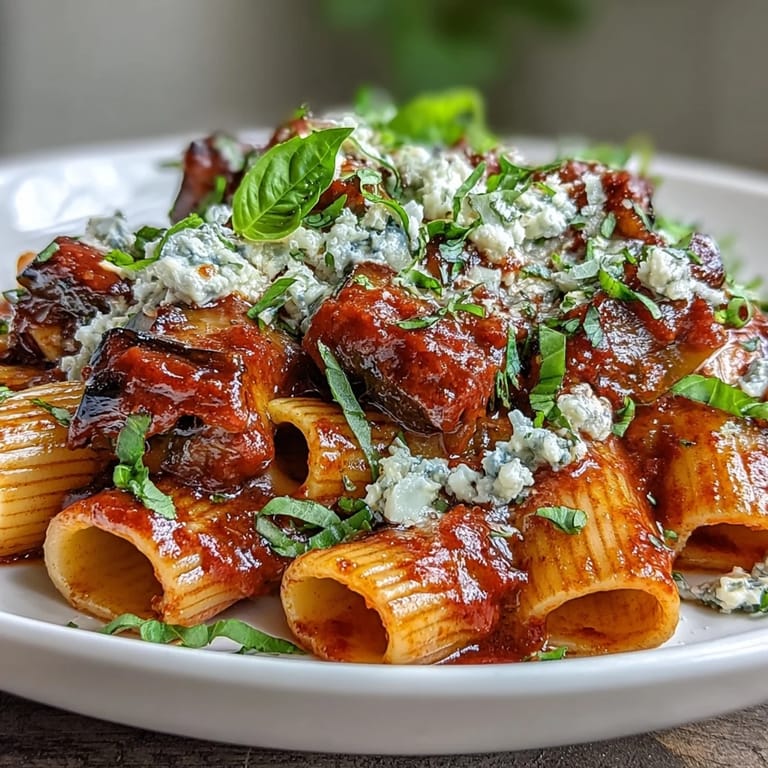
Save The first time someone told me this dish was named after the opera singer Bellini, I thought it was just Italian romance talking. Then I plated it one evening and understood: it has rhythm, balance, and a moment at the end where everything resolves into something greater than its parts. That's when cooking stopped being about following instructions and started being about understanding why each step matters.
The Eggplant is Everything
I used to boil eggplant, thinking that was the way, and wondered why it turned into purple mush. Roasting changed my entire approach to this vegetable. When you roast it, the water escapes, the flesh concentrates, and the edges caramelize in a way that brings out sweetness you didn't know was there. It's the difference between something that absorbs sauce and something that has its own presence on the plate. The eggplant isn't supporting the tomato sauce here—they're equals in a conversation.
The Sauce Needs Time to Think
Resist the urge to rush the simmer. I once tried to serve this 5 minutes after adding the tomatoes, and it tasted sharp and thin, like I'd simply warmed up pasta water. When you give those tomatoes 15–20 minutes of gentle heat, stirring now and then, something happens: the raw edge softens, the acidity mellows, and the sauce darkens to a deeper red. That patience is what transforms canned tomatoes into something that tastes homemade and intentional.
Why Fresh Basil Makes All the Difference
Basil is fragile, and that's exactly the point. Add it early to the sauce and it steeps, becoming integrated and subtle. Add it at the end as a garnish and it stays bright, offering a sharp contrast to the warm, soft pasta. I learned to split the difference: stir most of it into the sauce in the final 2 minutes, then finish with a few fresh leaves scattered on top. It's a small decision that shifts the entire eating experience, reminding you of Sicily with every bite.
- If you can't find ricotta salata, Pecorino Romano or even feta will give you that salty finish that wakes up the whole dish.
- Gluten-free pasta works beautifully here if you need it—the sauce doesn't care, and neither will your guests.
- Save a splash of pasta water even after serving; if the dish sits and tightens up, a little starch brings it back to silky life.
 Save
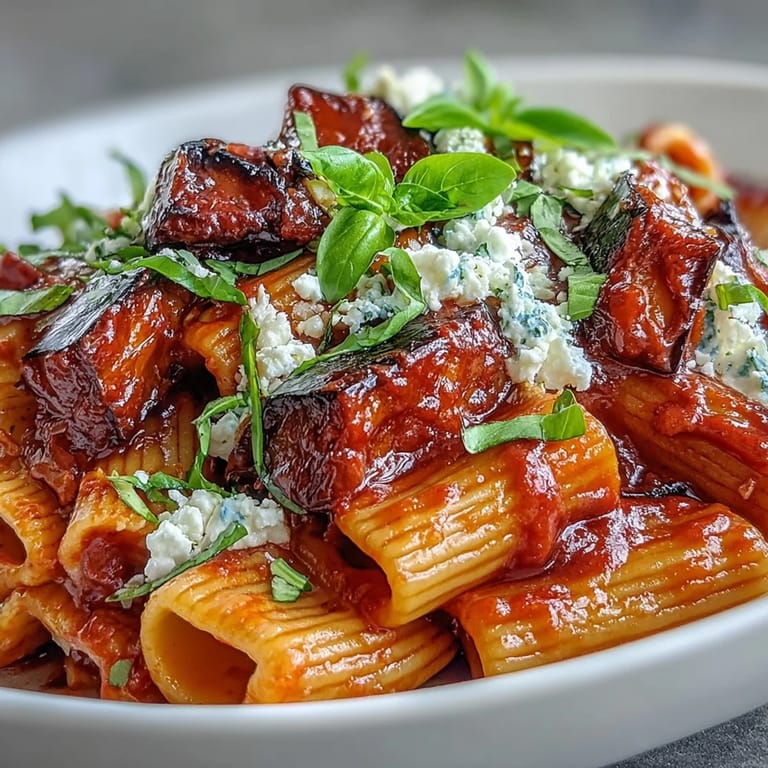
Save Every time I make this, I'm back in that Sicilian kitchen, watching someone who'd never consulted a recipe pull together something perfect. That's what this dish teaches you: that good food doesn't need to be complicated, just attentive. Make it tonight.
Recipe FAQ
- → What makes Pasta Alla Norma authentic?
Authentic Pasta Alla Norma features three key components: roasted eggplant, tomato sauce, and ricotta salata. The eggplant should be roasted until golden and tender, not fried. The sauce uses simple ingredients—tomatoes, onion, garlic, and olive oil. The finishing touch is crumbled ricotta salata, a salty, firm cheese traditional to this Sicilian dish.
- → Can I substitute the ricotta salata?
Yes, you can use Pecorino Romano for a similar salty profile, or feta cheese which works well with the eggplant and tomato flavors. For a dairy-free version, omit the cheese entirely or use a plant-based crumbly cheese alternative. The dish will still be delicious without it.
- → Do I need to salt the eggplant before cooking?
Salting eggplant before cooking helps remove bitterness and excess moisture, but it's not strictly necessary for this dish. If you have time and want to ensure the best texture, sprinkle the cubes with salt and let them sit for 30 minutes before rinsing and patting dry. For convenience, you can skip this step—the roasting process still yields excellent results.
- → What pasta shape works best?
Rigatoni or penne are ideal choices because their tubular shape holds the sauce well. The ridges and hollows capture the roasted eggplant pieces and rich tomato sauce. Other short pasta shapes like fusilli or maccheroni also work. Avoid long strands like spaghetti—they don't pair as well with chunky eggplant pieces.
- → Can I make this dish ahead?
The tomato sauce and roasted eggplant can be prepared up to 2 days in advance and stored separately in the refrigerator. Reheat gently before tossing with freshly cooked pasta. For the best texture, cook the pasta just before serving and add a splash of pasta water to bring everything together.
- → How do I prevent the eggplant from becoming oily?
Roasting eggplant at high heat (220°C) helps it develop a golden exterior without absorbing too much oil. Use just enough oil to lightly coat the cubes—about 2 tablespoons for one large eggplant. Spread them in a single layer on the baking tray and turn once during cooking for even browning.