 Save
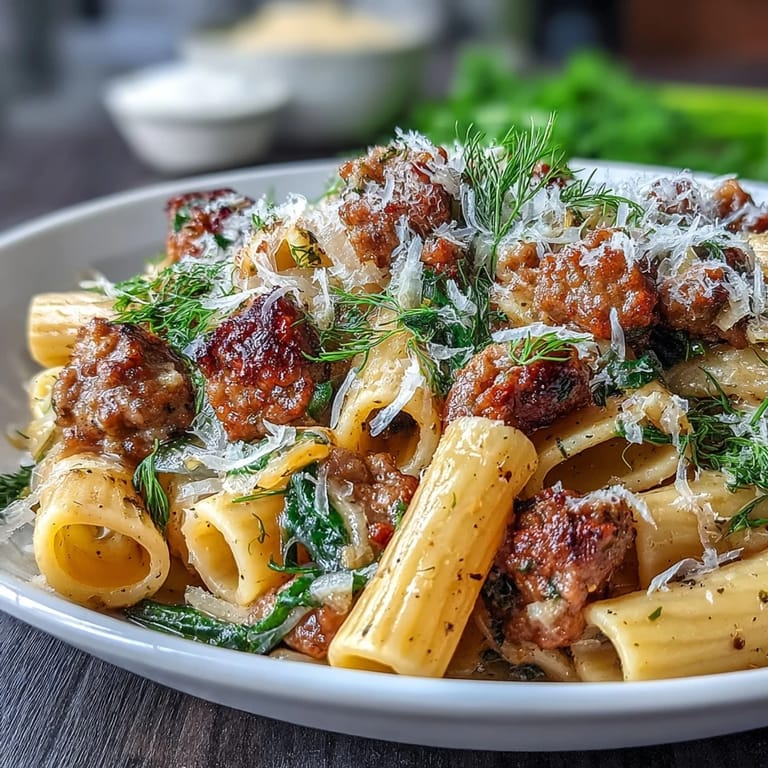
Save There's something about a weeknight when the kitchen feels too cold to stand at for long, and you want something warm in your belly fast. That's when fennel pasta came into my life—not from a cookbook, but from a half-empty vegetable drawer and the sound of sausage sizzling in a pan on a December evening. The anise-like sweetness of fennel transformed what could have been ordinary into something I've made dozens of times since. It's the kind of dish that doesn't demand much of you but gives back generously.
I made this for my neighbor one snowy Sunday when she mentioned craving something warming but simple. As we ate at my kitchen counter, she kept asking about the ingredient that made it taste so different—it was the fennel, sliced thin enough to almost disappear into the sauce but distinct enough to change everything. That moment reminded me that the best meals often come from listening to what someone needs, not following what's trendy.
Ingredients
- Short pasta (penne, rigatoni, or fusilli): 350 g (12 oz)—choose whatever shape you have because the real magic is in how the thin sauce clings to every ridge and curve.
- Italian sausage: 250 g (9 oz), sweet or spicy, casings removed—brown it first so the fat renders and seasons the whole dish, or skip it entirely for a vegetarian version.
- Fennel bulb: 1 large, trimmed and thinly sliced—this is the soul of the recipe, bringing an unexpected sweetness and subtle anise note that makes people ask what you did differently.
- Onion: 1 small, thinly sliced—softens with the fennel and adds savory depth without overwhelming.
- Garlic: 2 cloves, minced—adds at the last moment to keep it bright and punchy.
- Olive oil: 2 tbsp—use decent oil here because it's doing the work of a cream sauce.
- Dry white wine: 60 ml (1/4 cup), optional—deglazes the pan and adds a whisper of acidity that lifts everything.
- Crushed red pepper flakes: 1/2 tsp, optional—for those who like a gentle heat creeping in at the end.
- Salt and freshly ground black pepper: to taste—season boldly, especially the fennel and onion as they cook.
- Grated Parmesan cheese: 30 g (1/4 cup), plus more for serving—finishes the dish with umami and a slight nuttiness.
- Fennel fronds or fresh parsley: chopped, for garnish—the finishing touch that makes it look intentional and taste fresher.
Tired of Takeout? 🥡
Get 10 meals you can make faster than delivery arrives. Seriously.
One email. No spam. Unsubscribe anytime.
Instructions
- Get the water boiling and pasta going:
- Fill a large pot with water, add a generous pinch of salt—it should taste like the sea—and bring to a rolling boil. Add your pasta and cook until it's just tender with a slight bite, usually a minute or two before what the package says. This is where you'll reserve that liquid gold: scoop out about 120 ml (1/2 cup) of starchy pasta water before draining everything else.
- Brown the sausage if using:
- While the water heats, warm a large skillet over medium heat with 1 tbsp of olive oil. If you're using sausage, crumble it into the pan as it hits the heat, breaking it into small, uneven pieces with the back of a wooden spoon. Watch it turn from pink to golden brown, about 4 to 5 minutes, then transfer it to a clean plate—don't wash the pan, because those browned bits are flavor.
- Soften the fennel and onion:
- Pour the remaining tablespoon of oil into that same pan. Add your thinly sliced fennel and onion, sprinkle with a pinch of salt, and let them cook gently over medium heat. Listen for the soft sizzle, not an aggressive crackle—you want them to turn golden and tender, almost melting into each other, which takes about 4 to 5 minutes. The salt draws out their moisture and helps them soften faster.
- Wake it up with garlic:
- Once the fennel is soft enough to bend, scatter in your minced garlic and stir constantly for just about a minute. You want to smell that toasted, warm garlic aroma, but not let it brown—burned garlic tastes bitter and ruins the whole thing.
- Deglaze with wine if you're using it:
- Pour in the white wine if you have it, and use a wooden spoon to scrape up all those caramelized bits stuck to the bottom of the pan. Let it bubble and reduce for a minute or two until most of the liquid has evaporated and the smell is less sharp, more mellow.
- Bring it all together:
- Return the cooked sausage to the pan, add a pinch of red pepper flakes if you like heat, and give everything a stir. Now add your drained pasta and begin tossing, pouring in your reserved pasta water a little at a time until the sauce coats everything in a silky, light emulsion. The starch from the pasta water is what makes this work—it's your secret weapon.
- Finish with cheese and seasoning:
- Stir in the Parmesan while everything is still warm and moving, then taste and adjust salt and pepper. You want it to taste bright and balanced, not heavy—this is a light sauce that should feel like a whisper, not a shout.
- Plate and garnish:
- Divide among bowls and top with chopped fennel fronds or parsley and a shower of extra Parmesan. Serve immediately while everything is hot and the pasta still has that slight slip to it.
 Save
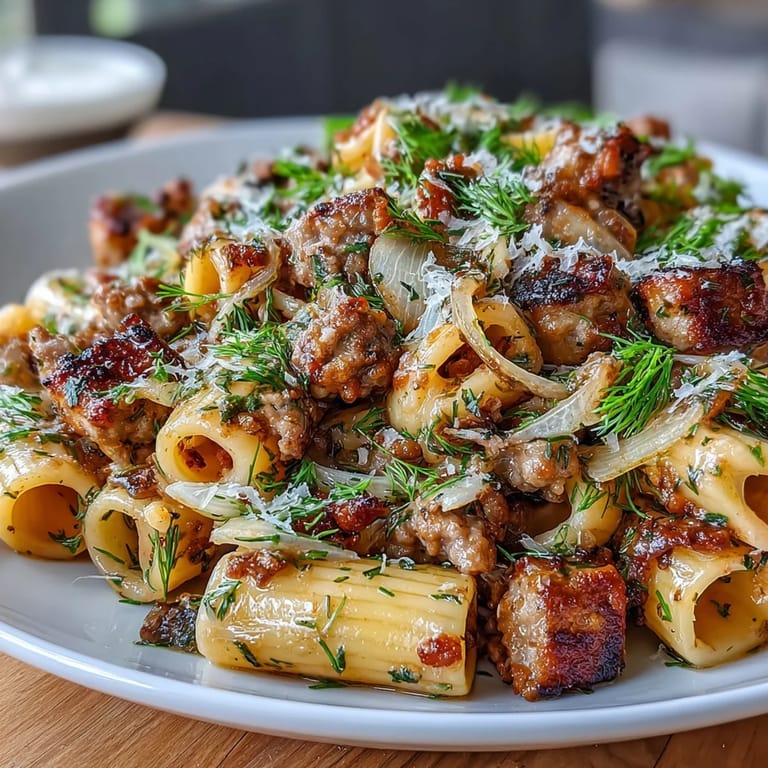
Save The first time someone came back for seconds and said they'd never thought to cook with fennel before, I felt a small victory. It's not a fancy ingredient or a secret technique—it's just paying attention to what you have and treating it with respect.
Why Fennel is the Quiet Star
Fennel doesn't announce itself loudly the way chili or garlic does. Instead, it whispers something subtle and sweet, almost like a memory of licorice that your brain registers before your taste buds do. I learned this by accident when I sliced some too thin one evening and it nearly disappeared into the sauce, but the dish tasted fuller, richer, and more balanced than when I'd used thicker pieces. Now I understand that fennel's job is to soften and round out the salty, meaty sausage without competing with it—it's a supporting actor who makes everyone else look better.
The Sausage Question
You don't actually need the sausage for this to work, but it does change the story. With it, the dish becomes hearty and satisfying in a way that feels complete for dinner. Without it, you have a lighter, almost vegetable-forward pasta that's equally delicious but different. I've made both versions depending on what's in the fridge and who I'm feeding, and I've never had someone complain about either one. The fennel carries the dish either way—the sausage just adds weight and richness if you want it.
Small Details That Matter
This is a dish where the small choices add up to something that feels intentional. The white wine, if you use it, smooths out the rawness of the onion and adds a subtle complexity that makes people wonder what's in there. The red pepper flakes, barely noticeable unless you want them, remind you that heat doesn't have to be aggressive—it can be a quiet warmth building underneath. Even how you slice the garlic (minced fine, not chunky) changes the texture and how it distributes through the pasta.
- Keep the heat at medium, not high—a gentle sizzle cooks more evenly and prevents the garlic and fennel from scorching.
- Taste constantly as you go, especially after adding salt, because it's easier to add more than to fix it if you go overboard.
- Have your pasta water ready before you start the sauce, because once everything is in the pan, you'll want to work quickly and not scramble for liquid.
 Save
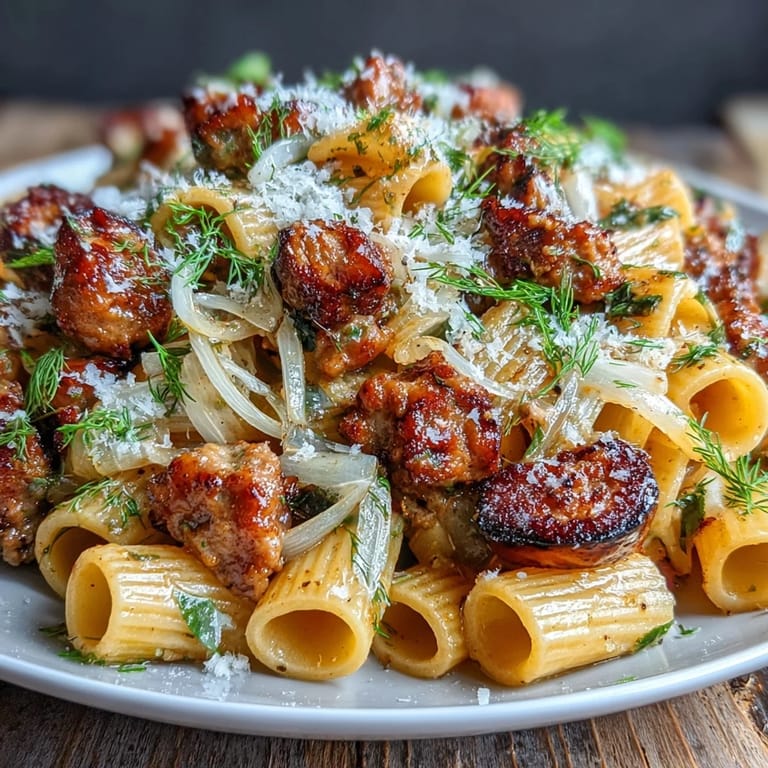
Save This pasta has become the kind of meal I make without thinking much about it, which is the highest compliment I can give a recipe. It's there when you need warmth and comfort in under 20 minutes, and it never disappoints.
Recipe FAQ
- → Can I make this vegetarian?
Yes, simply omit the sausage or use a plant-based alternative. The fennel and aromatics provide plenty of flavor on their own.
- → What type of pasta works best?
Short pasta shapes like penne, rigatoni, or fusilli work wonderfully as they catch the sauce and sausage pieces in their ridges and tubes.
- → Is the white wine necessary?
Not strictly—you can substitute with additional pasta water or vegetable broth, though the wine adds lovely acidity and depth to deglaze the pan.
- → How do I slice fennel properly?
Trim the fronds and stalks, cut the bulb in half lengthwise, remove the tough core, then thinly slice crosswise for even cooking.
- → Can I add more vegetables?
Absolutely—baby spinach or kale can be stirred in at the end to wilt. Roasted red peppers or sun-dried tomatoes also complement the flavors beautifully.
- → How should I store leftovers?
Store in an airtight container in the refrigerator for up to 3 days. Reheat gently with a splash of water or olive oil to refresh the sauce.