 Save
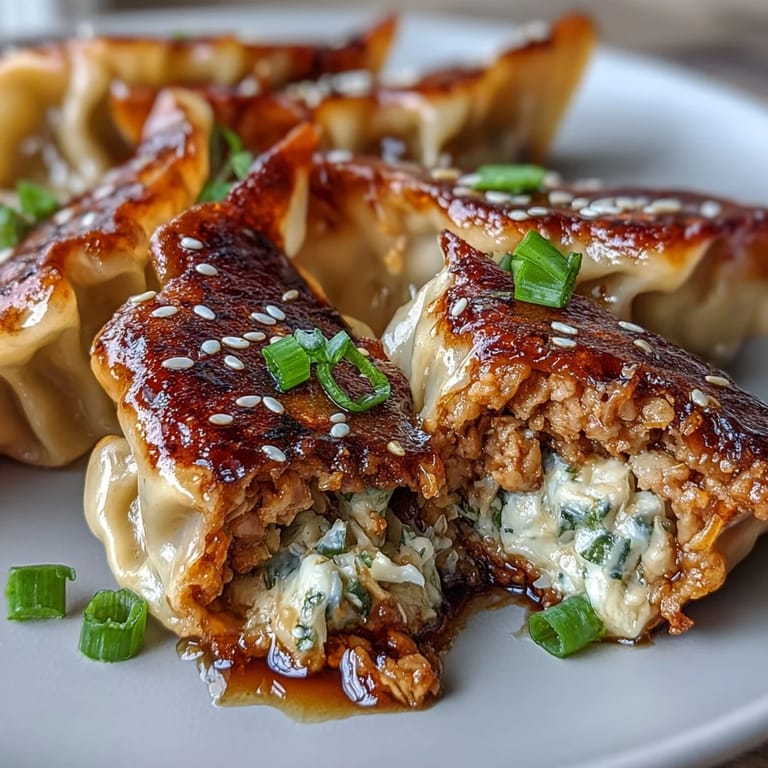
Save There's something about the sizzle of dumplings hitting a hot pan that just stops you in your tracks. My neighbor brought over a container of homemade gyozas one evening, and I was mesmerized watching them transform from pale little parcels into golden-brown treasures with a satisfying crunch. That night inspired me to figure out my own version using store-bought wonton wrappers, because honestly, life gets busy and sometimes the shortcut tastes just as good. Now these smashed gyozas are my go-to when friends drop by unexpectedly or when I need something impressive on the table in under 35 minutes.
I made a big batch of these for my sister's casual dinner party last spring, and watching people's faces light up when they bit into one was worth every minute of prep work. Someone asked if I'd ordered them from a restaurant, and I couldn't help but smile knowing they came straight from my kitchen with barely any fuss. That moment taught me that simple, well-executed food often impresses more than anything complicated ever could.
Ingredients
- Ground pork: The filling's backbone, though chicken or even crumbled tofu work beautifully if you want something lighter.
- Napa cabbage: Finely shred it by hand or food processor for moisture and that signature dumpling texture that releases juice as it cooks.
- Green onions: Slice them thin so they distribute evenly throughout the filling without overpowering any single bite.
- Garlic and ginger: Mince them small and don't be shy, because these two are what give the filling its unmistakable aromatic depth.
- Soy sauce and sesame oil: These two work as the flavor foundation, so use good quality versions if you can because they really shine through.
- Sugar and black pepper: The sugar rounds out savory notes while pepper adds that subtle heat that makes you want another one.
- Wonton wrappers: The shortcut that makes this all possible, grab them from the Asian section of most supermarkets and keep them in your freezer.
- Neutral oil: Canola or sunflower work best because they won't burn at high heat and they let the filling flavors take center stage.
- Dipping sauce ingredients: Soy sauce, rice vinegar, and optional chili oil create a bright, tangy contrast that cuts through the richness beautifully.
Tired of Takeout? 🥡
Get 10 meals you can make faster than delivery arrives. Seriously.
One email. No spam. Unsubscribe anytime.
Instructions
- Make the filling:
- Combine everything in a bowl and mix with your hands until it's evenly blended and the filling feels slightly sticky. Don't overwork it, just get everything incorporated so the flavors marry together.
- Fill and fold:
- Lay wrappers out, add a heaping teaspoon of filling to each center, wet the edges with water, then fold into a half-moon and press to seal. Use your palm to gently smash each one slightly flat so it has more surface area to get crispy.
- Pan-fry the first batch:
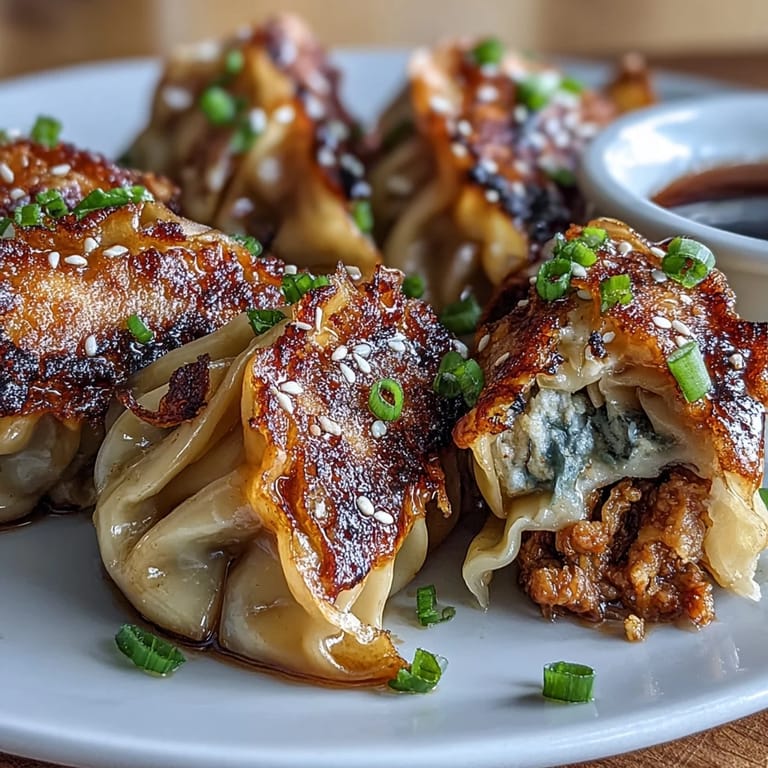
- Heat oil in a large nonstick skillet over medium-high heat, place gyozas flat side down, and cook for 2-3 minutes until the bottoms turn a deep golden brown. You'll hear them sizzle and smell that toasted aroma which means you're doing it right.
- Steam and finish:
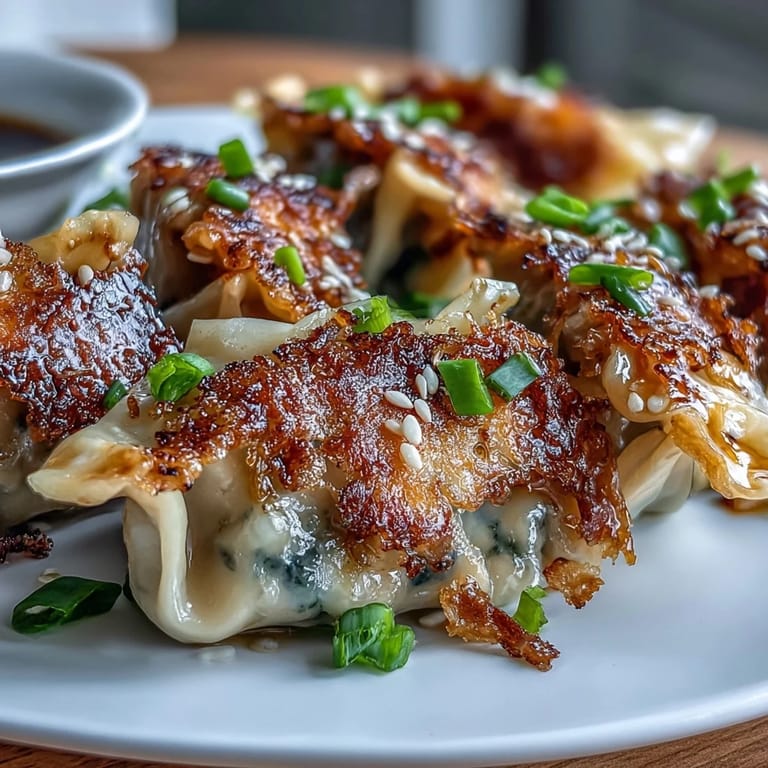
- Add water to the pan, cover immediately, and steam for 2-3 minutes until the wrappers soften and the filling cooks through. Remove the lid and cook for one more minute to re-crisp those bottoms, which is the secret to achieving that textural contrast everyone loves.
- Repeat and sauce:
- Transfer the first batch to a plate and repeat the whole process with the remaining gyozas. While they cook, mix all dipping sauce ingredients together in a small bowl.
- Serve hot:
- Arrange gyozas on a platter with the dipping sauce nearby and eat them while they're still warm and crispy.
 Save
Save My nephew, who's usually picky about everything, ate six of these in a row without saying a word, which is basically a love letter from a ten-year-old. I realized in that moment that cooking isn't really about perfection or fancy techniques, it's about creating something people actually want to eat again and again.
The Filling Game
The magic happens in how you prepare the filling, not just the ingredients themselves. I've learned that mixing it together by hand lets you feel when everything is properly combined and the texture becomes slightly sticky, which is what keeps the gyozas moist inside during cooking. Try pressing a small amount between your fingers, it should hold together but still feel light and airy, not dense or gluey.
The Steam and Crisp Method
This two-stage cooking technique is what separates great gyozas from mediocre ones. The initial pan-fry creates that golden crust, steaming cooks the filling through and softens the wrapper, and that final dry-heat minute brings back the crispness you almost lost. It sounds fiddly but once you do it once, it becomes automatic and honestly takes less time than waiting for delivery.
Making It Your Own
These gyozas are incredibly forgiving and actually improve when you start substituting and experimenting. I've made them with ground chicken when I had pork, thrown in mushrooms for earthiness, and even tried adding a tiny bit of fish sauce for depth that nobody could quite name but everyone noticed. The base recipe is solid enough to handle your tweaks without falling apart.
- Try adding finely chopped shiitake mushrooms or carrots to the filling for texture variation.
- Swap the pork for ground turkey, chicken, or crumbled tofu depending on what you have or what sounds good that day.
- Garnish with fresh chives or cilantro right before serving to add brightness that cuts through the richness.
 Save
Save These smashed gyozas have become my secret weapon for those nights when I need something that looks impressive but doesn't demand hours in the kitchen. They're proof that shortcuts and homemade food aren't mutually exclusive, and that sometimes the best meals come from giving yourself permission to make cooking simpler.
Recipe FAQ
- → What makes smashed gyozas different from regular dumplings?
Smashed gyozas are flattened before cooking, creating more surface area for crispy bottoms. The dual cooking method of pan-frying followed by steaming yields tender wrappers with irresistibly crunchy edges, unlike traditional boiled or steamed dumplings.
- → Can I make these ahead of time?
Assemble uncooked gyozas up to 24 hours ahead. Place them in a single layer on a parchment-lined baking sheet, freeze until firm, then transfer to an airtight container. Cook directly from frozen, adding 1-2 extra minutes to the steaming time.
- → What other proteins work well for the filling?
Ground chicken, turkey, or beef all work beautifully. For a vegetarian version, use crumbled firm tofu, finely chopped mushrooms, or mashed shelled edamame. Adjust seasoning slightly depending on the protein's natural flavor profile.
- → Why do my dumplings fall apart during cooking?
Ensure wrappers are sealed properly by moistening edges thoroughly and pressing firmly. Don't overfill—use only one teaspoon of filling per wrapper. Cook in batches without overcrowding the pan to prevent sticking and tearing.
- → How do I store and reheat leftovers?
Store cooked gyozas in an airtight container in the refrigerator for up to 3 days. Reheat in a dry skillet over medium heat for 2-3 minutes per side to restore crispiness. Avoid microwaving, which makes the wrappers soggy.
- → Can I bake these instead of pan-frying?
Baking won't achieve the same crispy texture. However, you can bake at 400°F (200°C) for 12-15 minutes, brushing with oil halfway through. For best results, finish under the broiler for 1-2 minutes to crisp the bottoms.